More strategic capital investment, in conjunction with a larger, highly skilled U.S. workforce, will be what turbocharges reshoring. Adopting advanced technologies, including automation and robotics, AI and IoT, enhances productivity, precision and safety while mitigating labor shortages. Advanced technology investment lowers the unit labor costs that often make domestic production uncompetitive, narrowing the cost gap and enabling more reshoring.
U.S. machine shops’ new equipment orders totaled $1.61 billion for Q12026, a 27.8 percent increase from Q1 2025. This significant rise indicates a “strong appetite” from businesses for capital investment and a growing demand for automation technology amidst the manufacturing skilled labor shortage. Let’s dig in.
Only about 30 percent of companies are using total cost of ownership (TCO) in sourcing decisions. Most companies still make supplier selection decisions based on price alone, but when factoring in TCO, the math changes dramatically. Compared to China, the United States wins just about 8 percent of the time based on price alone, but that jumps to about 32 percent with TCO and up to about 46 percent when 15 percent tariffs apply. Many manufacturers are leaving competitive domestic options on the table simply by not doing the full math.
Closing the Gap
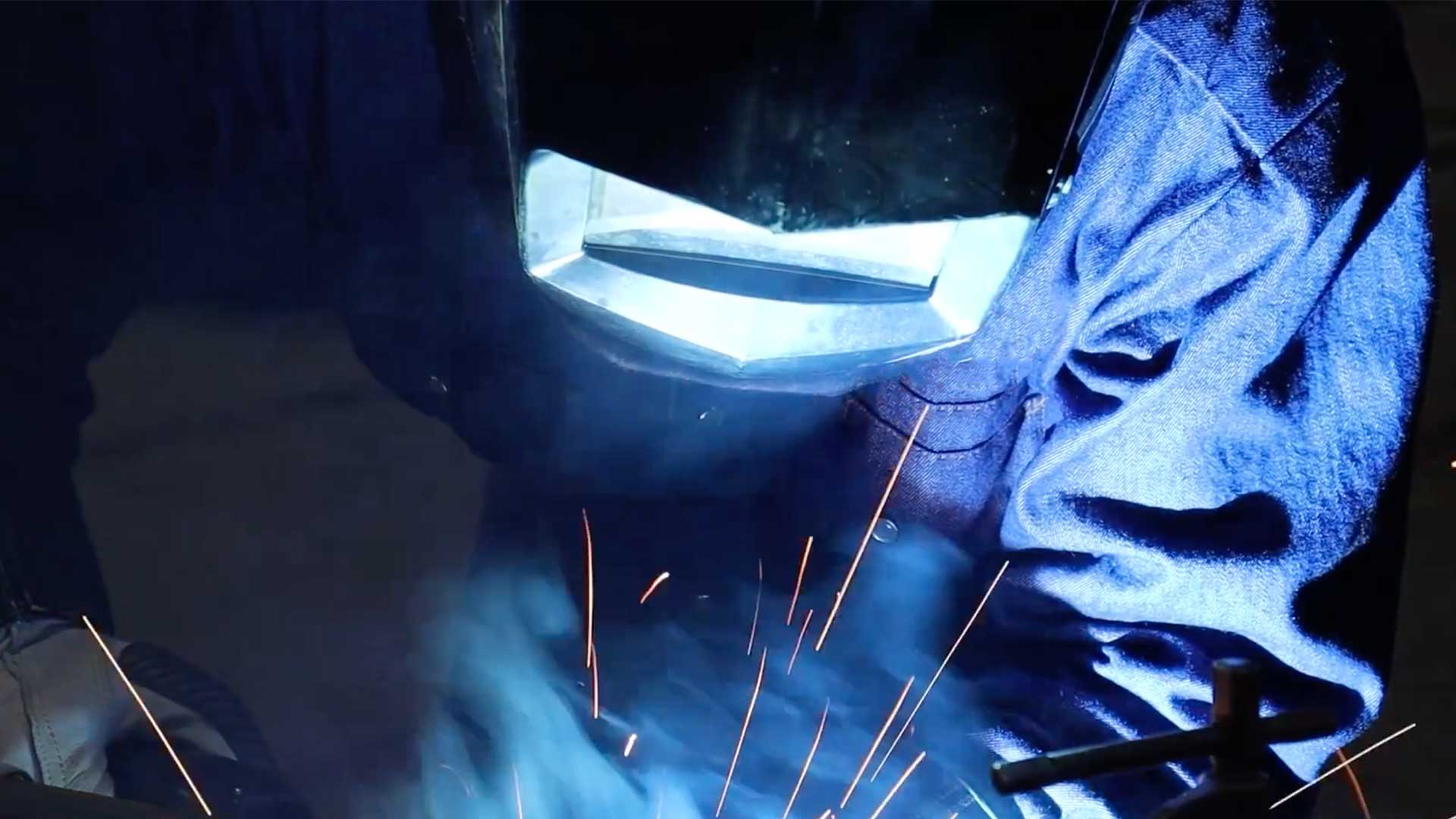
Advanced technologies help to close the TCO cost gap compared to competitor countries, enabling more reshoring. Automating critical elements of metal fabrication is a cost-effective way to achieve optimal precision, efficiency and productivity.
Manufacturers should begin by identifying system constraints that limit output across cutting, forming, welding and flow. Next, they should consider targeted technology that improves throughput at the bottleneck while maintaining a balanced flow across the entire operation.
It begins with a TCO evaluation whereby companies:
- Start by doing the math correctly using the free online Total Cost of Ownership (TCO) Estimator.
- Compare the TCO offshore vs. domestic.
- Pick those products where Ex-Works price is within 30 percent and TCO is within 5 percent. Against China about 30 percent of imports would meet those criteria.
- Identify processes to improve efficiency, accuracy and profitability; these are areas where automation solutions or process improvements are needed to make domestic TCO favorable.
Successful Automation
Automation’s biggest impact is on labor but the U.S.-versus-offshore comparison includes not just labor, but also burden and material. In a case where the offshore FOB (free on board) price is 20 percent lower, a two-year payback on automation is very unlikely based on price. But calculating based on a TCO difference of just 5 percent, the United States has a much better chance for a fast payback on automation. Integrating automation into a reshoring project can help companies bridge or completely close the cost gap between offshore and domestic operations.
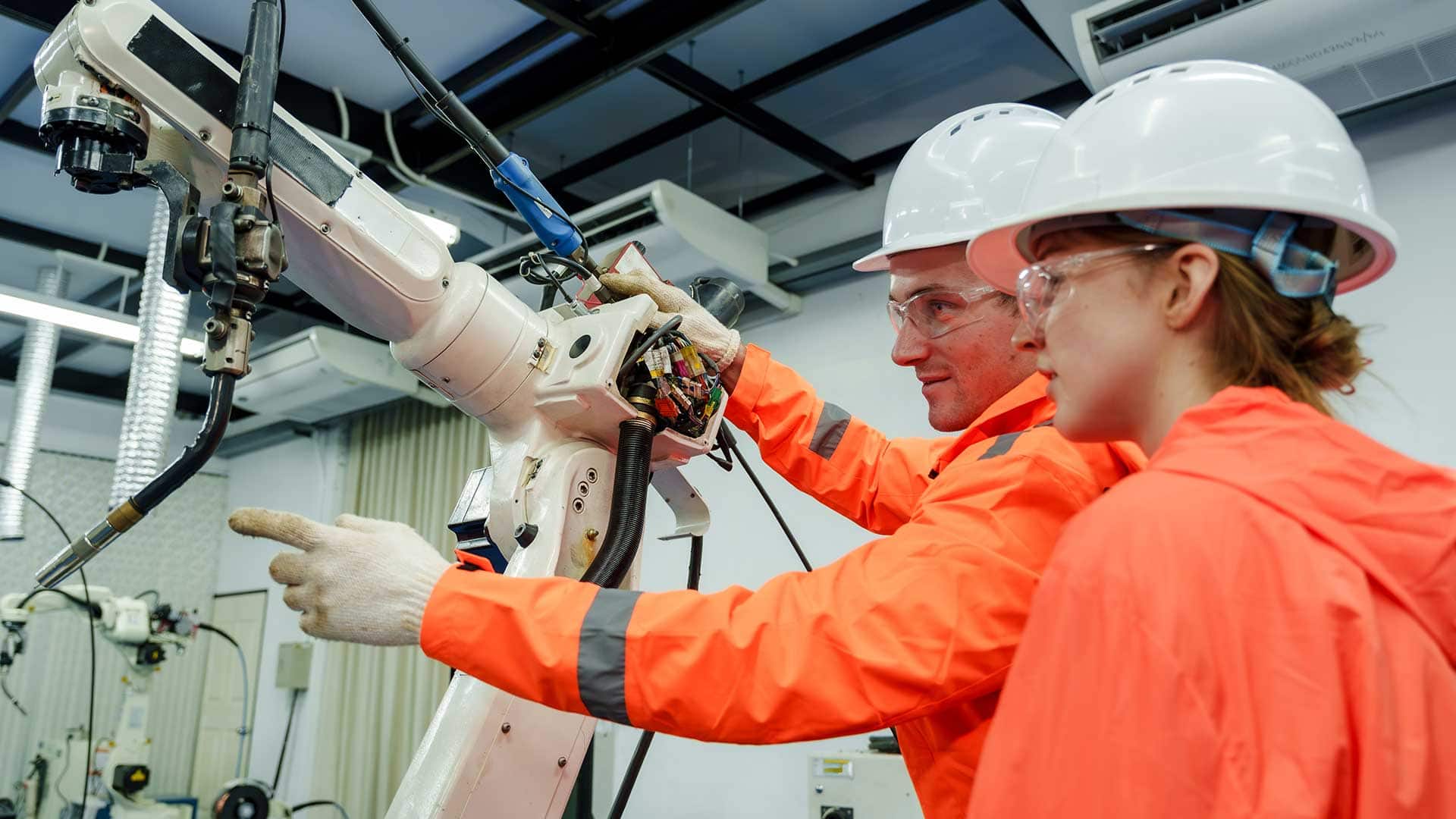
Workforce training should be a cornerstone of any plan. Successful automation deployment depends substantially on the human factor. Manufacturers that treat training as a central component of their automation strategy will be on track to realize tangible profitability gains by optimizing labor productivity.
In the 2025 Reshoring Survey, manufacturers ranked skilled workforce availability as the No. 1 constraint ahead of taxes and regulation. But many still expect talent to just “show up” instead of investing in training and recruitment.
Even when reshoring makes economic sense, execution can stall due to talent gaps. Training and upskilling labor to work alongside automated systems reduces errors and maximizes new technology investments.
Citing success stories can inspire manufacturing careers. For example, the American Welding Society and SkillsUSA recently selected 21-year-old Mikala Esposito, a student from Washtenaw Community College in Ann Arbor, Mich., as the official U.S. competitor in welding for the 48th WorldSkills Competition to be held this year in Shanghai, China.
Three of the college’s former WorldSkills qualifiers are now instructors in its Welding & Fabrication program. For those looking for financial assistance for training, check out “Industry Week’s Big List of Manufacturing Scholarships.”
Automation Plans
Companies are turning to advanced technologies and automation to create safer, more predictable working environments. When the work comes back, it can’t just put it in the same old factory with the same outdated equipment and inefficient workflow. It needs to be produced in more automated, modern facilities with training that supports long-term career growth that attracts and retains skilled workers.
New research found that reshoring production was a factor driving 61 percent of respondent companies’ automation plans. A staggering 95 percent of U.S. industrial organizations plan to introduce new automation over the next three years to support reshoring, combat labor shortages and mediate supply chain uncertainty.
The Long Goal
For the last four years, reshoring and foreign direct investment (FDI) job announcements have averaged about 280,000 per year. If the United States increases the quantity and quality of its skilled manufacturing workforce, that rate could grow to a consistent 350,000 per year. Additionally, if the country controls the cost issue via advanced technology investments and either a lower U.S. dollar or a consistent tariff policy, it could reshore plus FDI up to 500,000 new manufacturing jobs per year.
The United States has been under-investing relative to China and many other competitors. Narrowing the automation gap will drive more reshoring. Reducing the gap requires a multi-faceted approach, including a national robotics strategy, more STEM/apprenticeship training and incentives for automation adoption. Also, stable, continuous policy enables a positive ROI on investment in new factories and capital equipment.
Ready to Reshore?
Are you thinking about reshoring? Ready to narrow the cost gap and reshore? Click here to access the full list of reshoring resources offered by the Reshoring Initiative. For help, contact me at 847-867-1144 or harry.moser@reshorenow.org.
This article was originally published by FAB Shop Magazine Direct and was republished with permission from The Reshoring Initiative.