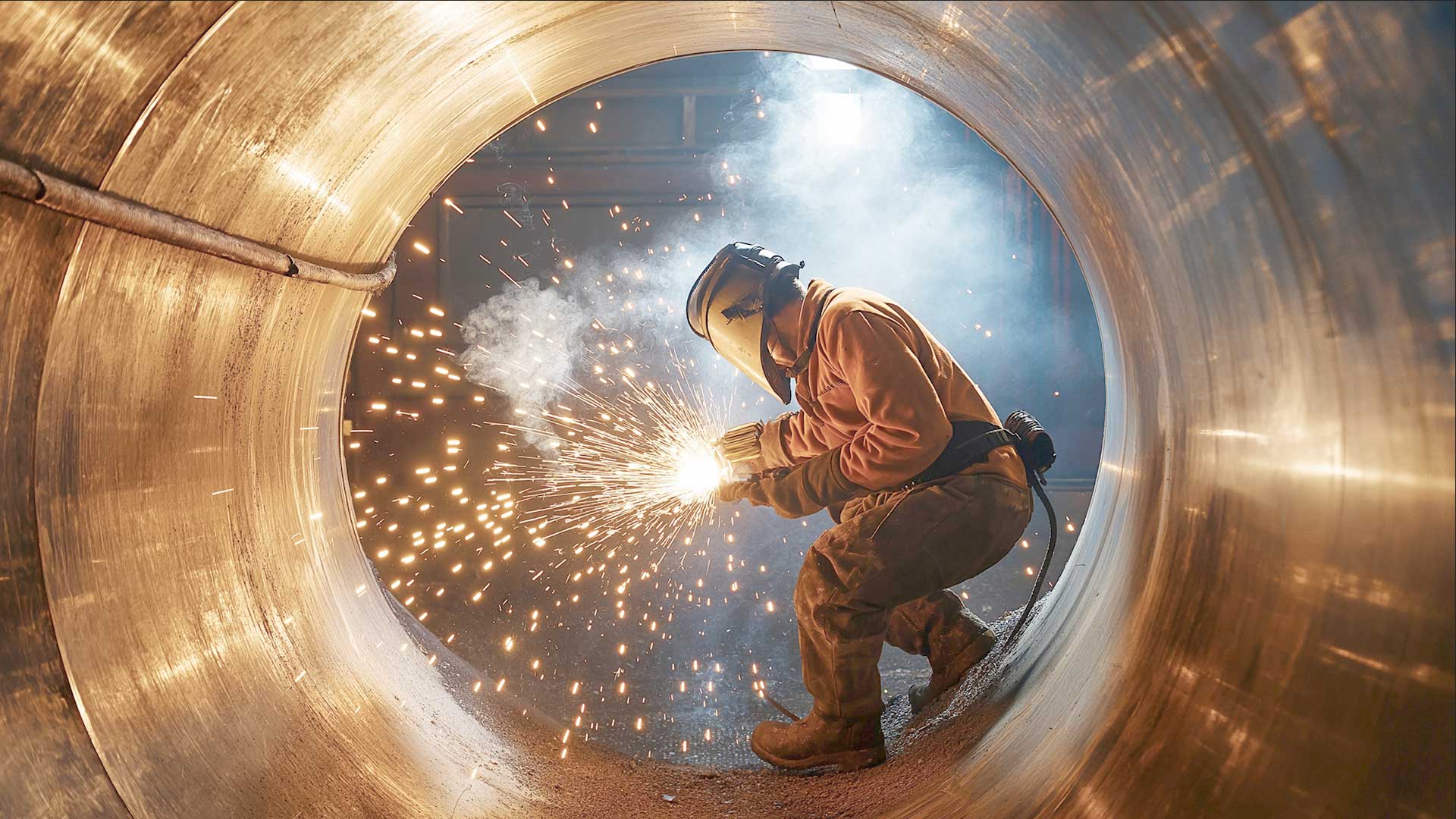
Steel is often preferred for tank fabrication because it provides strength, durability, design flexibility, proven performance, and broad applicability across many storage and processing applications. Steel tanks can be engineered for aboveground, underground, and field-erected service, as well as for water, fuel, chemicals, wastewater, industrial products, and other stored materials.
For tank owners, engineers, and facility operators, steel offers a practical combination of structural reliability, fabrication versatility, standards familiarity, corrosion-protection options, maintainability, and long-term value. STI/SPFA represents fabricators of steel tanks, pipes, pressure vessels, and specialty fabricated products serving industries including petrochemical, power generation, food, pharmaceutical, fuels, wastewater, and water transmission.
Why Material Choice Matters
Material selection affects nearly every part of a tank project, including design, fabrication, installation, inspection, maintenance, regulatory compliance, service life, and lifecycle cost. Tanks are not one-size-fits-all products. They may be installed aboveground or underground, fabricated in a shop or erected in the field, exposed to weather or buried conditions, and designed to store products with very different pressure, temperature, compatibility, and corrosion considerations.
For tank fabrication, the material must support the tank’s structural demands, stored product, site conditions, code or standard requirements, inspection needs, and owner expectations. A tank material must also be practical to fabricate, weld, coat, inspect, maintain, repair, and modify.
Steel is frequently selected when a project requires a strong, engineered material that can be fabricated into a wide range of tank types, sizes, shapes, and service applications.
Key Benefits of Steel
Structural Strength
Steel provides the structural strength needed for demanding tank applications. Tanks may need to withstand internal loads, external loads, soil loads, hydrostatic pressure, wind, seismic forces, vacuum conditions, thermal effects, handling, transportation, and installation stresses.
This strength makes steel suitable for many types of fabricated tanks, including shop-fabricated storage tanks, underground storage tanks, field-erected storage tanks, pressure vessels, and specialty fabricated products. STI/SPFA’s ACT-100® resource notes that the strength of the steel tank provides structural integrity, with long-lasting corrosion protection from the outer coating.
Design Flexibility
Steel can be fabricated into a wide range of tank sizes, shapes, configurations, and specialty designs. It can be used for cylindrical tanks, rectangular tanks, vertical tanks, horizontal tanks, reservoirs, standpipes, elevated tanks, double-wall tanks, compartment tanks, pressure vessels, and custom-fabricated systems.
This flexibility allows steel tanks to be designed around project-specific needs such as capacity, site constraints, stored product, coating or lining requirements, appurtenances, access points, monitoring systems, operating conditions, and regulatory requirements. STI/SPFA’s steel water storage tank selection guide notes that steel structures can be constructed in a variety of shapes and identifies reservoirs, standpipes, and elevated tanks as primary categories of water storage tank design.
Fabrication Versatility
Steel is well suited for welding, forming, rolling, cutting, fitting, and shop or field fabrication. This fabrication versatility helps manufacturers build tanks for many industries and applications, from standardized shop-built tanks to large field-erected tanks and specialized engineered products.
STI/SPFA members fabricate a variety of steel products including tanks, pressure vessels, pipe, and specialty products. The association also identifies storage tanks, STI technologies, aboveground storage tanks, underground storage tanks, and fabricator resources within its steel tanks and pipe fabrication product areas.
Standards Familiarity
Steel tank fabrication is supported by well-established standards, recommended practices, codes, and industry guidance. Depending on the tank type and application, steel tanks may be designed, fabricated, inspected, or maintained using standards and programs related to aboveground tanks, underground tanks, field-erected tanks, pressure vessels, potable water tanks, fuel storage, corrosion protection, and inspection.
This standards familiarity helps engineers, owners, fabricators, inspectors, and regulators work from recognized technical expectations. STI/SPFA notes that its members build steel pressure vessels that meet or exceed ASME and industry standards, and its Field Erected Tank Section members build tanks that meet or exceed AWWA, NSF, API, and industry standards.
Corrosion-Protection Options
Steel tanks can be paired with corrosion-protection systems selected for the application and environment. Depending on the tank type, these may include coatings, linings, cathodic protection, jacketed systems, composite systems, urethane coatings, fiberglass-reinforced protection, or other protective technologies.
For underground tanks, STI/SPFA licenses steel tank technologies including sti-P3®, ACT-100®, ACT-100-U®, and PERMATANK®, which combine steel with corrosion protection, secondary containment, or other protective features depending on the system.
Compatibility Across Applications
Steel is used across many tank applications because it can be specified and protected for different stored products and operating environments. Steel tanks may be used for fuel storage, potable water, wastewater, industrial materials, chemicals, food-related applications, power generation, petrochemical service, hazardous materials storage, and other fabricated product needs.
For underground fuel storage, STI/SPFA states that its licensed tanks and all makes and models of steel tanks manufactured in any time period are suitable for use with all blends of fuels meeting ASTM standards.
Maintainability and Repairability
Steel tanks can often be inspected, maintained, repaired, recoated, relined, modified, or rehabilitated over time. This is an important advantage for owners who manage tanks as long-term assets rather than short-term equipment purchases.
For field-erected tanks, STI/SPFA notes that private, municipal, and industrial water system engineers and operators specify steel tanks for reliability, long-term value, and low, predictable normal maintenance.
Long-Term Value
Steel tanks are often evaluated based on more than initial material cost. Owners may also consider strength, durability, fabrication flexibility, regulatory familiarity, inspection access, corrosion protection, repairability, service history, and expected lifecycle performance.
For many applications, steel’s value comes from its ability to be engineered, protected, inspected, maintained, and adapted over time.
How Steel Compares in This Application
Steel is commonly evaluated alongside other tank materials, including fiberglass-reinforced plastic, concrete, polyethylene, aluminum, stainless steel, and other alloy or composite systems.
The best material depends on stored product, installation environment, pressure or temperature requirements, regulatory requirements, size, site conditions, budget, maintenance expectations, and lifecycle planning.
Steel is often favored when the project requires strength, weldability, large capacity, custom fabrication, design flexibility, compatibility with recognized standards, corrosion-protection options, secondary containment, field erection capability, or long-term maintainability.
A balanced comparison should acknowledge that steel tanks must be properly designed, fabricated, protected, installed, inspected, and maintained. Steel’s advantage is not that it eliminates all maintenance. Its advantage is that it provides a strong, proven, standards-supported material platform that can be tailored to a wide range of tank applications.
When Steel Is the Best Fit
| Project Priority | Why Steel Fits |
|---|---|
| Structural strength | Steel provides strength for aboveground, underground, shop-fabricated, and field-erected tank applications. |
| Design flexibility | Steel can be fabricated into many tank shapes, sizes, orientations, configurations, and specialty designs. |
| Large-capacity storage | Steel is well suited for large field-erected tanks, reservoirs, standpipes, elevated tanks, and industrial storage applications. |
| Standards-based specification | Steel tank fabrication is supported by recognized standards, recommended practices, inspection programs, and industry guidance. |
| Corrosion protection | Steel can be paired with coatings, linings, cathodic protection, jacketed systems, or other protective technologies. |
| Secondary containment | Steel tanks can be designed with double-wall construction, interstitial monitoring, and other containment features where required. |
| Repairability | Steel tanks can often be inspected, repaired, recoated, relined, modified, or rehabilitated over time. |
| Broad application range | Steel is used for water, wastewater, fuel, chemicals, industrial materials, pressure vessels, and specialty fabricated products. |
Considerations and Nuances
Steel is a strong choice for many tank fabrication applications, but it must be properly selected, designed, fabricated, protected, installed, inspected, and maintained. The long-term performance of a steel tank depends on the full tank system, not the material alone.
| Consideration | Why It Matters |
|---|---|
| Stored product | Fuel, water, wastewater, chemicals, food products, and industrial materials may require different steel grades, coatings, linings, or design details. |
| Corrosion protection | Interior and exterior protection should be selected based on product, exposure, soil conditions, atmospheric conditions, and regulatory requirements. |
| Installation environment | Aboveground, underground, indoor, outdoor, field-erected, and shop-fabricated tanks each have different design and installation needs. |
| Applicable standards | Tank specifications should identify the relevant codes, standards, recommended practices, inspection requirements, and owner criteria. |
| Fabrication quality | Welding, forming, fit-up, testing, coating, lining, documentation, and quality control affect long-term tank performance. |
| Maintenance planning | Owners should plan for inspection, cleaning, coating maintenance, corrosion monitoring, repairs, and documentation. |
| Product compatibility | The tank material, coating, lining, gaskets, fittings, and accessories should be compatible with the stored product and operating conditions. |
Common Misconceptions
Steel tanks are
all the same.
Steel tanks vary widely by application, design, standard, fabrication method, coating or lining system, corrosion-protection strategy, and installation environment. A shop-fabricated aboveground tank, underground fuel tank, field-erected water tank, and ASME pressure vessel may all use steel, but they are not the same product.
Steel tanks cannot
resist corrosion.
Steel requires proper corrosion protection, but that does not make it unsuitable for corrosive environments. Coatings, linings, cathodic protection, jacketed systems, and other protective technologies can be selected based on the tank application and exposure conditions.
Steel is only used
for fuel tanks.
Steel is widely used for fuel storage, but it is also used for potable water, wastewater, industrial materials, petrochemical service, power generation, food, pharmaceutical, hazardous materials, pressure vessels, and specialty fabricated products. STI/SPFA represents member fabricators serving many of these industries.
Steel tanks are
difficult to customize.
Steel is highly customizable. It can be rolled, welded, formed, fitted, reinforced, coated, lined, compartmentalized, field erected, shop fabricated, and integrated with accessories or monitoring systems to meet project requirements.
Tank material is the only factor that determines performance.
Tank performance depends on the full system, including design, fabrication quality, installation, coatings or linings, corrosion protection, inspection, maintenance, monitoring, and the stored product. Material selection is important, but it is only one part of long-term tank performance.
FAQs
Related Resources
Steel Tanks & Pipe Fabrication
STI Technologies
Field Erected Tanks
Steel Water Storage Tanks: A Selection Guide
ACT-100®
Underground Storage Tank UST Maintenance
SP001 Aboveground Tank System Inspector Training
Pressure Vessels
Fundamentals of Field Erected Tank Construction
Choosing the right tank material is a long-term performance, maintenance, and compliance decision.
Steel offers structural strength, design flexibility, fabrication versatility, corrosion-protection options, standards familiarity, repairability, and lifecycle value for many tank applications.
Explore STI/SPFA’s steel tank resources or connect with STI/SPFA tank fabricators to learn more about steel solutions for aboveground, underground, field-erected, shop-fabricated, and specialty tank applications.