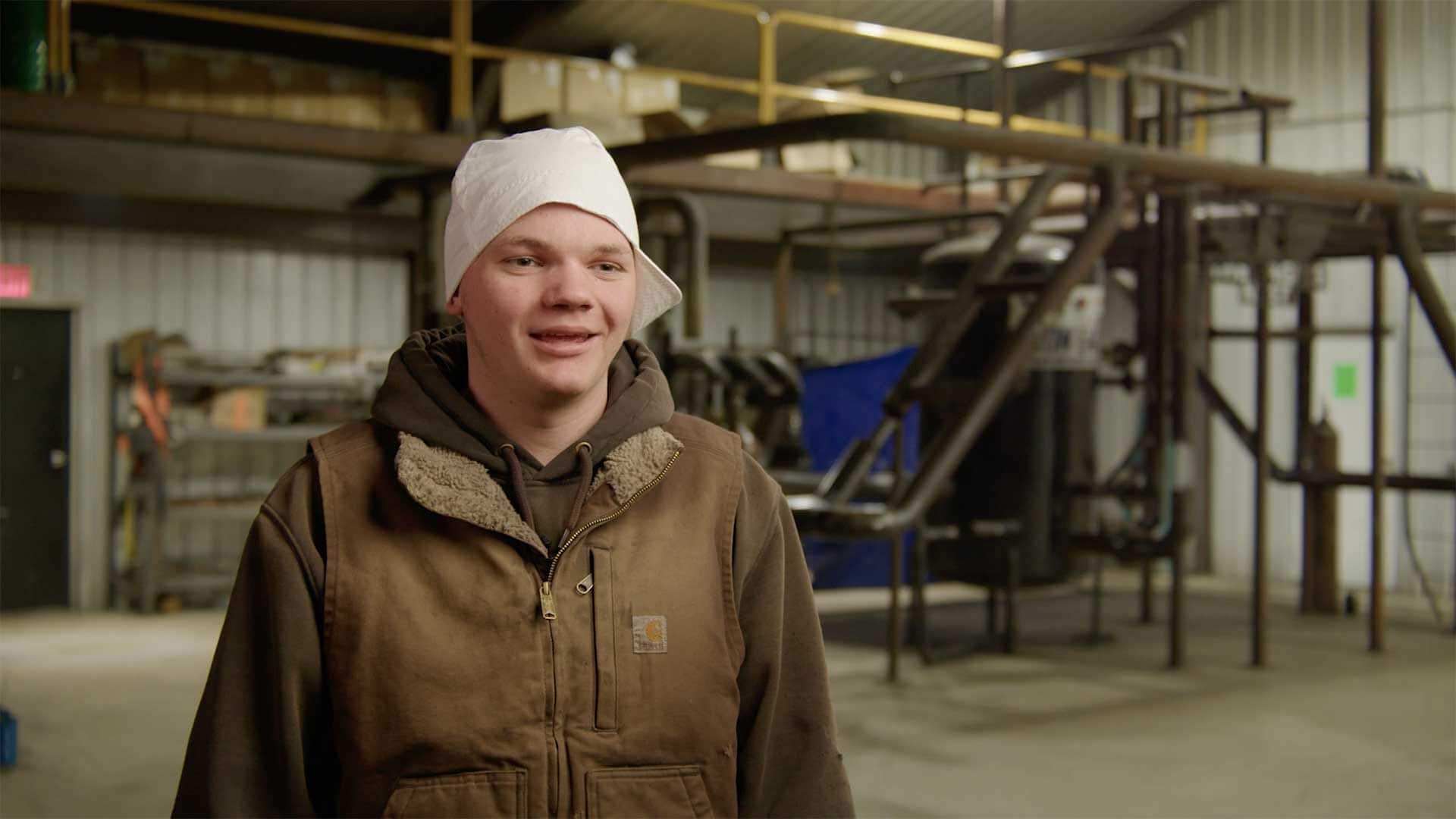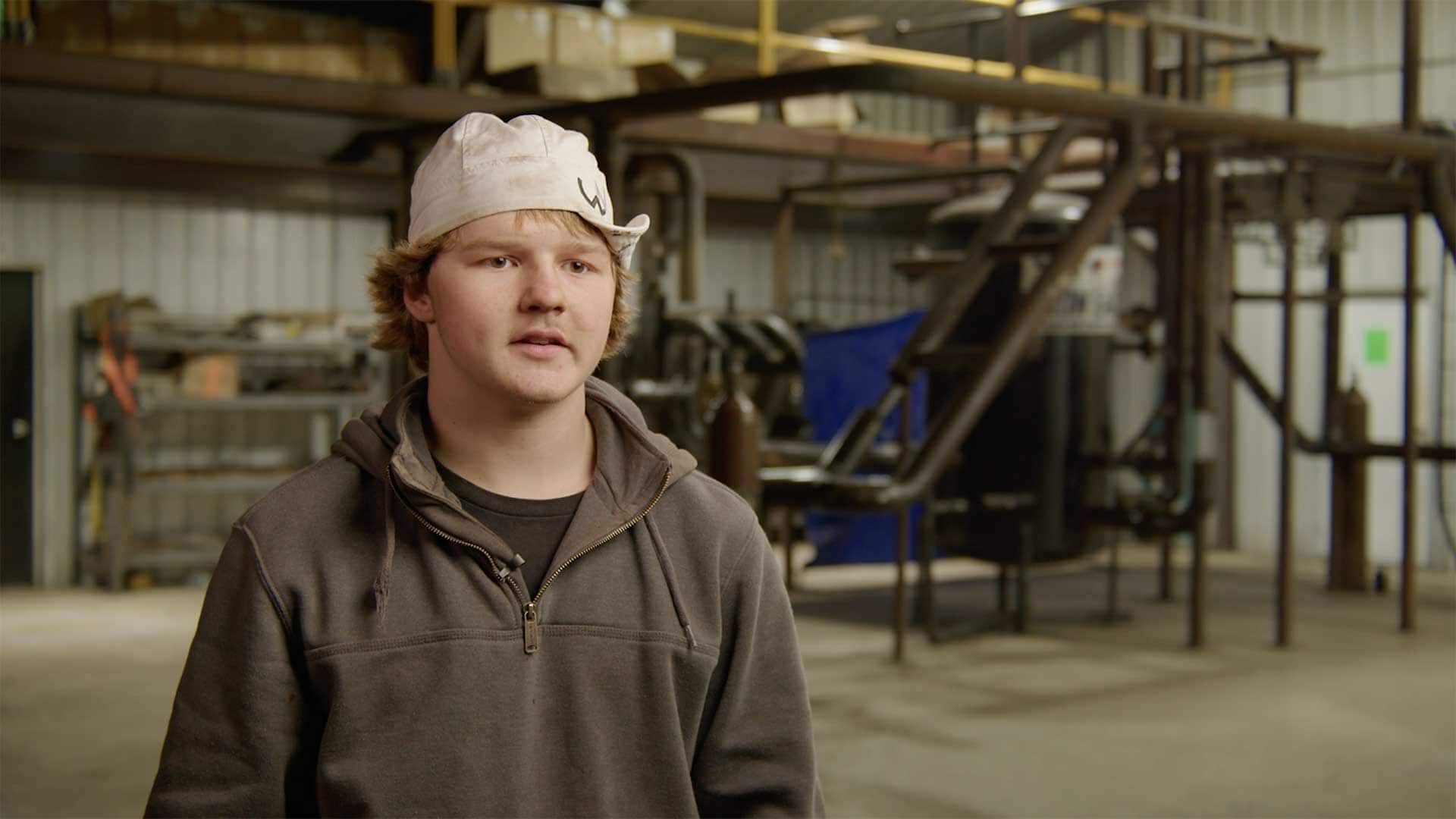
For Easton Smith, welding was not always the obvious path.
Growing up in Bolivar, Missouri, Easton was surrounded by family businesses in the restaurant industry and spent much of his early life working around people. While he enjoyed that environment, he struggled during high school to figure out what career path truly fit him. He knew he had an artistic side—drawing, painting, and creating always came naturally—but he wasn’t sure how that would translate into a profession.
That changed when a family connection introduced him to welding.
What started as a possibility quickly became something much more.
Discovering That Welding Is an Art Form
“When I first got here, I had zero background with this whatsoever,” Easton said. “I had no clue what I was doing.”
Despite starting from scratch, he quickly found himself drawn to the work. What stood out most was how closely welding connected to the creativity he had always enjoyed.
“Welding is art,” he explained. “You’re drawing with metal. If you don’t have a stable hand and the ability to really pay attention to what you’re doing, you won’t make it very far.”
That perspective helped transform the trade from just a job option into something he genuinely loved. The precision, focus, and craftsmanship involved made it feel like a natural fit.
Learning the Trade
Easton described the progression of welding education as both challenging and rewarding.
Students begin with stick welding and structural welding before moving into pipe welding. From there, the work becomes more advanced—combining TIG and stick welding, learning downhill welding techniques, and eventually progressing into full TIG welding.
As training advances, students also begin preparing for the next step: employment.
“At the two-week mark, you start talking about jobs,” he said. “You start calling people and figuring out what the pay is, what they want from you, what the test looks like.”
The final weeks become a balancing act between refining technical skills and planning for a career.
Growing Through Shared Experience
One of the biggest lessons Easton learned was the value of humility and continuous improvement.
Even with no prior experience, he found that the people around him were willing to help, and that collaboration became one of the most valuable parts of the process.
“You could be doing this for 20 years and still learn something from somebody who’s been doing it just two days longer than you,” he said.
That mindset—always learning, always improving—has shaped how he approaches both school and the trade itself.
A Career with Opportunity
For Easton, welding offers more than just a paycheck. It offers long-term opportunity.
He pointed to the strong earning potential in the field, especially through union opportunities like Local 83 in Kansas City, where skilled welders can build stable, well-paying careers with significant benefits.
“The way the union has come into play in this whole business, they’ve made it an extremely high-paying, worthwhile job.”
He also emphasized that welding offers multiple career paths—from pipe welding to highly specialized TIG work with stainless steel and polished metals—allowing people to find the type of work that best fits them.
More Than a Career
Beyond the technical skills and financial opportunity, welding gave Easton something more personal: purpose.
Before entering the trade, he described himself as mostly going to the gym and spending the rest of his time at home. Welding changed that.
“It’s given me another outlet to really feel good about myself,” he said. “To actually look forward to coming here and do something I enjoy.”
That sense of pride, combined with the close-knit culture of the school, made the experience feel like more than training.
“This is a second home for most people,” he said. “We all come here and it’s more like a family-oriented thing.”
Advice for the Next Generation
For anyone considering welding as a career, Easton’s advice is simple: try it.
Whether it’s taking a tour, watching someone weld, or participating in a short training program, he believes the best way to know if the trade is right for you is to experience it firsthand.
“If you’re on the fence about it, at least come take a tour,” he said. “That’s the best thing I would say—just at least try it.”
For Easton, that one decision opened the door to a career he never expected—but one that now feels exactly right.