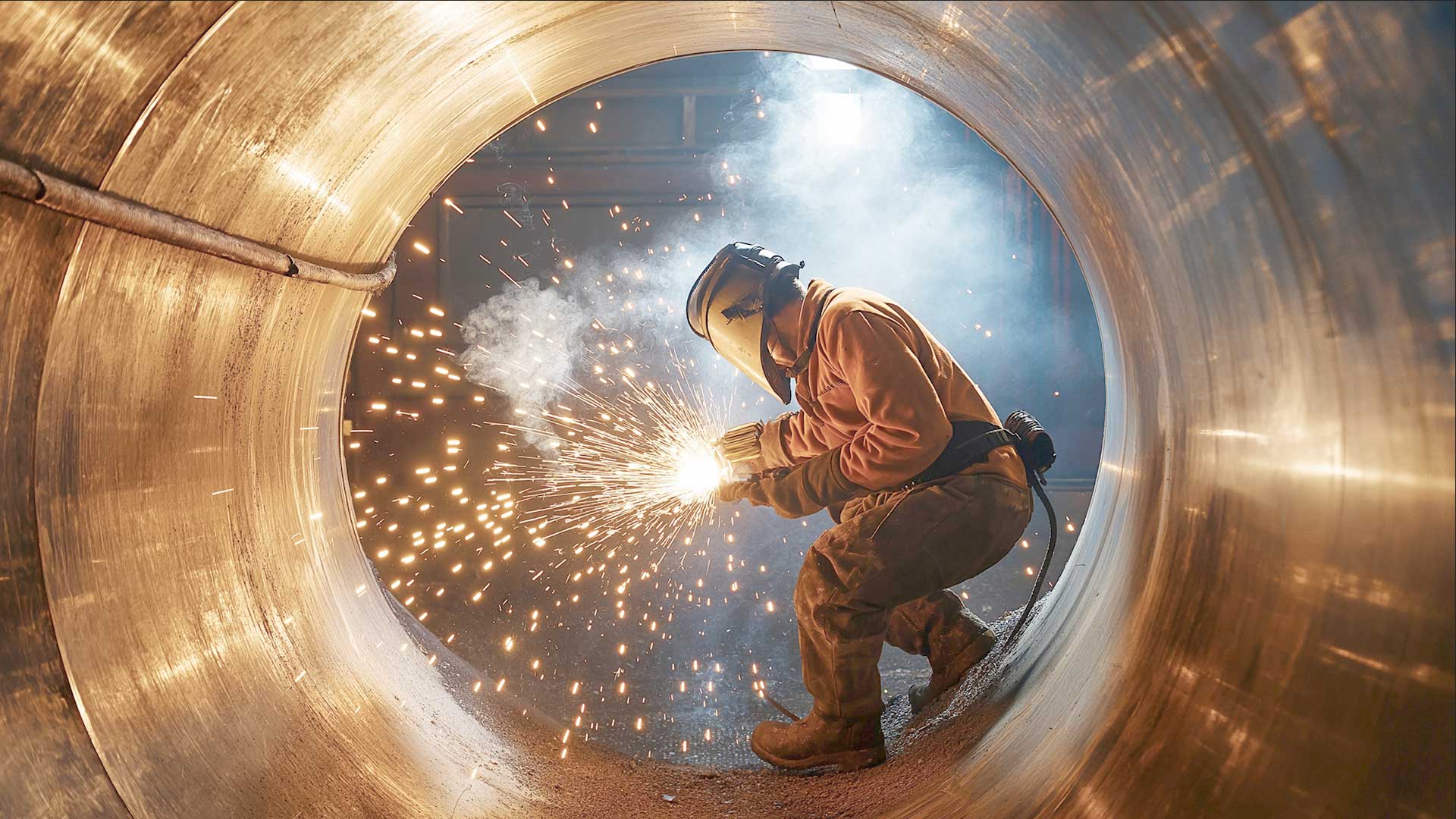
Steel is often preferred for water and wastewater pipe because it provides strength, flexibility, durability, and proven performance for critical infrastructure. Steel pipe can be designed for larger diameters, high pressures, varied soil conditions, internal or external pressure, complex alignments, fittings, joints, coatings, linings, and demanding installation requirements.
For water transmission, wastewater conveyance, and related pipeline applications, steel offers a practical combination of engineering flexibility, standards familiarity, quality control, and long-term maintainability. STI/SPFA members build steel water pipe that meets or exceeds ASCE, AWWA, and other industry standards for water transmission, with welded steel pipe available in diameters up to 180 inches under either internal or external pressure.
Why Material Choice Matters
Material selection affects the design, installation, performance, maintenance, and long-term reliability of water and wastewater pipe systems. Pipe and pipelines are buried infrastructure assets that must perform under internal pressure, external soil and traffic loads, groundwater exposure, temperature changes, surge conditions, seismic movement, corrosion risks, and changing system demands.
For water and wastewater systems, pipe material choice also affects fittings, joints, coatings, linings, inspection, repair, constructability, and lifecycle cost. A pipe material must support the hydraulic, structural, environmental, and operational requirements of the project while aligning with applicable standards and owner expectations.
Steel is frequently selected when the project requires a strong, engineered pipe material that can be adapted to demanding site conditions, large diameters, pressure requirements, and complex layouts.
Key Benefits of Steel
Strength and pressure performance
Steel pipe is inherently strong and well suited for pressure pipe applications. Its strength and elastic behavior allow it to perform under demanding internal pressure, external loads, surge conditions, and other service requirements.
This makes steel a strong option for water transmission mains, force mains, treatment plant piping, crossings, pump station connections, and other applications where pressure performance and structural reliability are critical.
Large-diameter capability
Steel is especially valuable for large-diameter water and wastewater pipe applications. Welded steel pipe can be manufactured in very large diameters, making it well suited for major transmission pipelines, raw water lines, finished water lines, wastewater conveyance, industrial water systems, and infrastructure projects where capacity and hydraulic performance are central design considerations.
Large-diameter capability is one of the reasons steel remains a preferred option for major water and wastewater infrastructure projects.
Design flexibility
Steel pipe can be engineered for a wide range of project conditions. It can accommodate changes in alignment, fittings, pressure classes, wall thickness, coatings, linings, joints, field welding, restrained joints, and special design conditions.
This flexibility is especially important for projects that include bends, reducers, tees, crosses, laterals, wyes, connections, crossings, difficult terrain, or unique installation requirements. Steel water pipe fittings help modern transmission systems redirect flow, transition diameters, and safely handle pressure, external loads, and long-term operating conditions.
Standards familiarity
Steel water pipe is supported by established standards and manuals of practice. AWWA’s C200 series of standards covers steel pipe, coatings, and linings, and AWWA M11 is the primary reference for steel water pipe design and installation.
This standards framework helps engineers, owners, fabricators, and contractors specify, design, review, manufacture, install, inspect, and maintain steel pipe systems with a recognized technical foundation.
Coating and lining options
Steel pipe can be protected with coatings and linings selected for the service environment, soil conditions, water quality, wastewater exposure, and project requirements. Options may include cement-mortar linings and coatings, epoxy coatings and linings, polyurethane coatings and linings, tape coating systems, and other corrosion protection approaches.
This range of coating and lining options allows steel pipe systems to be tailored for corrosion protection, water quality, wastewater conditions, installation environment, and long-term performance.
Quality control and certification
Steel pipe projects benefit from manufacturing controls, testing, inspection, and quality assurance. The SPFA Pipe Quality Certification Program is a third-party audited system that verifies a fabricator’s ability to consistently produce high-quality steel water pipe and fittings.
The program evaluates quality assurance and control, lining and coating operations, equipment, welding procedures, management systems, engineering, and procurement practices. This supports consistent expectations for quality, documentation, fabrication, coating, lining, and manufacturing practices.
Maintainability and repairability
Steel pipe can be inspected, repaired, modified, rehabilitated, and protected over time. This matters because water and wastewater pipe systems are long-term assets that may need future connections, repairs, recoating, lining work, cathodic protection, or other maintenance activities.
Steel’s maintainability supports long-term asset management and gives owners practical options for repair, rehabilitation, and system adaptation.
Long-term infrastructure value
Steel pipe is often evaluated based on more than initial material cost. For many projects, owners also consider capacity, pressure performance, joint selection, fittings, corrosion protection, constructability, service life, maintenance access, repair options, and long-term reliability.
For water and wastewater infrastructure, those factors can make steel a strong choice when the pipe system is expected to serve as a critical asset over many decades.
How Steel Compares in This Application
Steel is commonly evaluated alongside other pipe materials, including ductile iron, concrete pressure pipe, fiberglass-reinforced pipe, PVC, and HDPE. The best choice depends on diameter, pressure, soil conditions, corrosion environment, installation method, project location, owner standards, and long-term maintenance expectations.
Steel is often favored when the project requires large diameters, custom fittings, high pressures, special wall thicknesses, restrained joints, field flexibility, complex alignments, or engineered solutions for demanding conditions. Steel’s combination of strength, ductility, elasticity, weldability, and fabrication flexibility makes it especially useful for large transmission and conveyance systems, treatment and pumping facilities, and high pressure penstocks.
A balanced comparison should acknowledge that steel requires appropriate corrosion protection and sound design. Its advantages are strongest when coatings, linings, joints, fittings, installation practices, and maintenance planning are addressed as part of the overall system design.
When Steel Is the Best Fit
| Project Priority | Why Steel Fits |
|---|---|
| Large-diameter pipe | Steel is well suited for major water transmission, wastewater conveyance, industrial water, and treatment plant pipe systems. |
| Pressure performance | Steel provides strong, elastic performance for internal pressure, external pressure, surge conditions, and other service loads. |
| Complex alignments | Steel supports custom fittings, bends, reducers, tees, laterals, wyes, and other fabricated components. |
| Standards-based specification | Steel water pipe is supported by AWWA C200-series standards and AWWA M11 design guidance. |
| Coating and lining flexibility | Steel pipe can be paired with coatings and linings selected for water quality, wastewater exposure, soil conditions, and corrosion protection needs. |
| Quality control | SPFA Pipe Quality Certification supports manufacturing, welding, coating, lining, and quality assurance practices for steel water piping. |
| Future adaptability | Steel can often accommodate repairs, modifications, future connections, corrosion protection systems, and rehabilitation strategies. |
Considerations and Nuances
Steel is a strong choice for many water and wastewater pipe applications, but it must be properly designed, manufactured, coated, lined, installed, inspected, and maintained. The performance of a steel pipe system depends on the full system, not the pipe material alone.
| Consideration | Why It Matters |
|---|---|
| Corrosion protection | Coatings, linings, cathodic protection, and soil/environmental evaluation may be needed to protect steel pipe. |
| Internal service environment | Potable water, raw water, reclaimed water, wastewater, and industrial water may require different lining or coating considerations. |
| Soil and groundwater conditions | Buried pipe must account for soil chemistry, groundwater, resistivity, stray current, bedding, backfill, and external loading. |
| Joint selection | Joint type affects installation, thrust restraint, movement, pressure performance, and field constructability. |
| Fabrication quality | Welding, fittings, dimensional control, coating, lining, and testing all affect long-term performance. |
| Installation practices | Handling, bedding, backfill, welding, field coating, and inspection must align with project specifications and applicable standards. |
| Maintenance planning | Owners should plan for inspection, corrosion monitoring, repairs, future connections, and rehabilitation over the life of the pipe system. |
Common Misconceptions
Steel pipe is only used for water transmission.
Steel is widely used in water transmission, but it can also serve wastewater, industrial water, treatment plant, force main, intake, outfall, and other pipe applications when properly designed for the service environment.
Steel pipe is not suitable for corrosive environments.
Steel requires proper corrosion protection, but that does not make it unsuitable for corrosive environments. Coatings, linings, cathodic protection, and project-specific corrosion control strategies can be used to protect steel pipe.
All pipe materials behave the same under pressure.
Pipe materials differ in strength, stiffness, elasticity, pressure performance, surge response, and long-term behavior. Steel’s strength and elastic performance make it well suited for demanding water and wastewater pipe applications.
Steel pipe is
difficult to customize.
Steel is highly adaptable. Fabricated steel fittings, bends, reducers, tees, laterals, wyes, flanges, and other components allow steel pipe systems to be designed around project-specific conditions.
Coatings and linings are an afterthought.
For steel water and wastewater pipe, coatings and linings are part of the system design. They should be selected based on service conditions, corrosion risk, water or wastewater chemistry, installation environment, and long-term performance expectations.
FAQs
Related Resources
Steel Water Pipe
Steel: The First Choice for Large-Diameter Water Pipe
Steel Pipe Standards and Resources
Suggested Specification for Buried Steel Water Transmission Pipe
SPFA Pipe Quality Certification Program
Inside the Build: Steel Water Pipe – SPFA Pipe Quality Certification
Fittings Design for Steel Water Pipe
Steel Pipe: A Century of Service Life
Choosing the right pipe material is a long-term infrastructure decision.
Steel offers strength, large-diameter capability, pressure performance, design flexibility, coating and lining options, and practical lifecycle advantages for many water and wastewater pipe applications.
Explore STI/SPFA’s steel water pipe resources or connect with STI/SPFA steel water pipe fabricators to learn more about steel solutions for water transmission, wastewater conveyance, and critical pipe infrastructure.