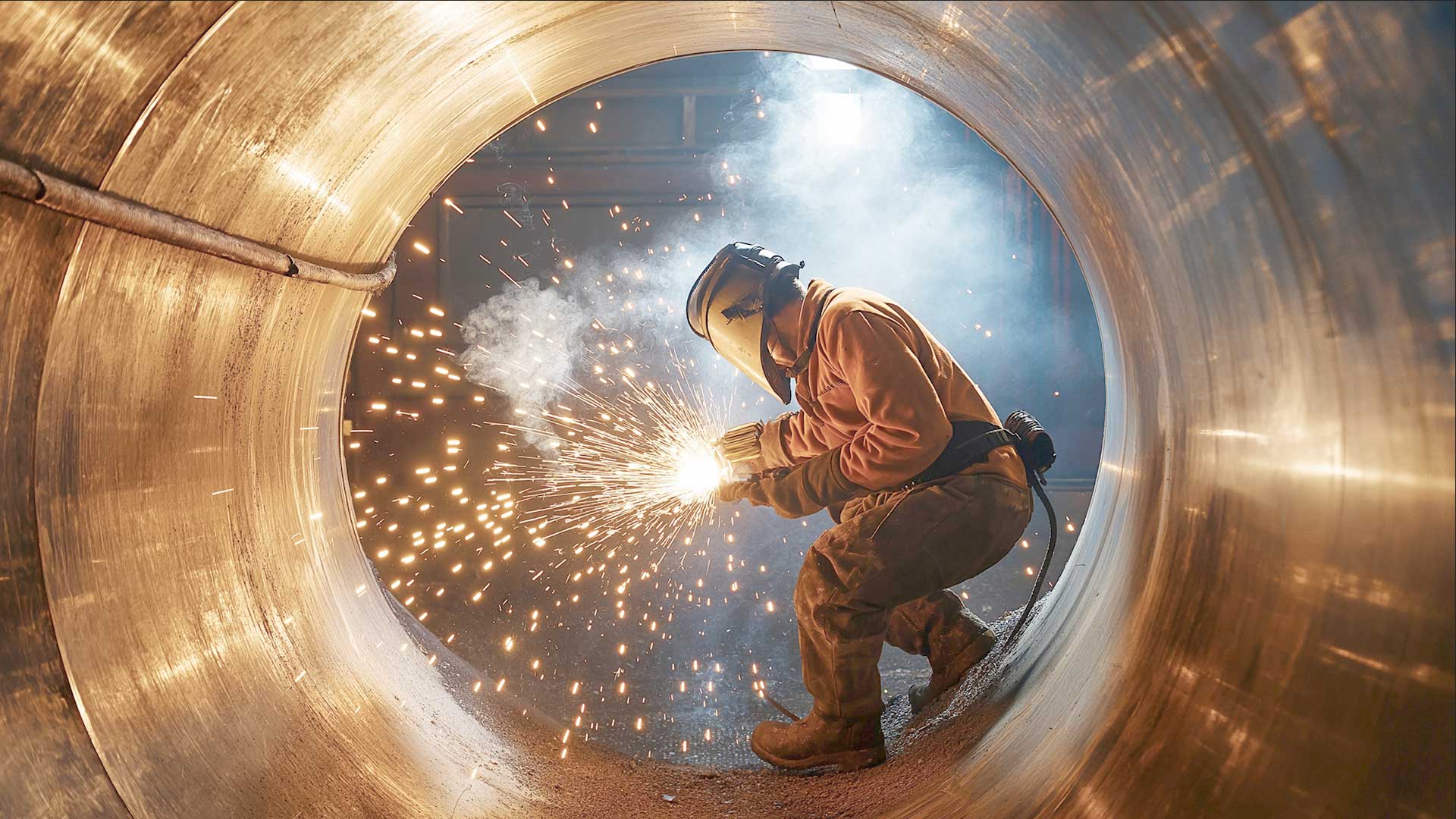
Steel and concrete are both used for large field-erected storage tanks, especially in municipal, industrial, water, wastewater, and fire protection applications. The best choice depends on the stored product, tank capacity, site conditions, design standard, construction schedule, maintenance expectations, inspection access, repair needs, and long-term asset management goals.
The main difference is that steel field-erected tanks use welded or bolted steel plate construction, while concrete tanks use reinforced or prestressed concrete construction. Steel is often selected for its strength, flexibility, inspectability, repairability, and long history in field-erected storage applications. Concrete may be selected when a project prioritizes mass, stiffness, buried or partially buried construction, or a specific concrete tank standard or owner preference.
For many owners, the decision is not simply “which material lasts longer.” The better question is which tank system provides the best combination of performance, maintenance access, repair options, lifecycle value, and suitability for the stored product and site.
Quick Comparison Table
| Topic | Steel Field-Erected Storage Tanks | Concrete Field-Erected Storage Tanks |
|---|---|---|
| Primary material | Carbon steel, stainless steel, or other steel plate materials | Reinforced or prestressed concrete |
| Construction method | Field erection using steel plates, welding, bolting, forming, lifting, and inspection | Cast-in-place, precast, reinforced, or prestressed concrete construction |
| Common water storage standard context | AWWA D100 for welded carbon steel tanks for water storage | AWWA D110 or AWWA D115 for prestressed concrete water tanks |
| Main design focus | Strength, pressure/head, roof design, foundations, coatings/linings, seismic/wind loads, appurtenances, and inspection | Concrete structure, prestressing or reinforcement, watertightness, foundations, cracking control, and field observations |
| Inspection access | Steel surfaces and welds are generally accessible for inspection, maintenance, and repair planning | Inspection focuses on concrete condition, cracking, leakage, embedded steel or prestressing systems, coatings/linings, and joints |
| Maintenance | Typically includes coating or lining inspection and renewal, corrosion monitoring, structural inspection, and appurtenance maintenance | Typically includes concrete condition assessment, crack/leak evaluation, joint maintenance, coating or liner maintenance when used, and structural review |
| Repairability | Steel can often be repaired, modified, welded, reinforced, or recoated by qualified personnel | Concrete repairs may require specialized concrete repair, crack sealing, prestressing evaluation, coating/liner repair, or structural rehabilitation |
| Fabrication flexibility | Strong fit for custom sizes, appurtenances, penetrations, roofs, access, mixing systems, and future modifications | Can be effective for specific geometries and large storage volumes, but modifications may be more complex |
| Typical applications | Municipal water tanks, industrial storage tanks, fire water tanks, petroleum and chemical storage, terminals, wastewater and process tanks | Municipal water tanks, wastewater structures, buried or partially buried storage, and certain large-volume storage applications |
| Key specification question | Does the owner need a strong, inspectable, repairable, adaptable tank with established steel standards and maintenance practices? | Does the owner need a concrete structure suited to the site, service, and applicable concrete tank standard? |
What Is a Steel Field-Erected Storage Tank?
A steel field-erected storage tank is a large tank assembled at the project site from steel plate and related components. Field erection is used when the tank is too large to be shipped as a completed shop-fabricated tank.
Steel field-erected tanks are used for water, wastewater, petroleum, chemicals, fire protection, industrial liquids, and other bulk storage needs. STI/SPFA notes that field-erected tanks can be designed to hold from 50,000 gallons to several million gallons and may include foundations, cathodic protection, piping, and painted graphics or color schemes.
For water storage, welded steel tanks are commonly associated with ANSI/AWWA D100, which covers welded carbon steel tanks for water storage and includes minimum requirements related to design, construction, inspection, and testing.
What Is a Concrete Field-Erected Storage Tank?
A concrete field-erected storage tank is a tank or containment structure built using reinforced concrete, prestressed concrete, precast concrete, cast-in-place concrete, or related methods. Concrete tanks are often used in water, wastewater, and other civil infrastructure applications.
For water storage, prestressed concrete tanks may be designed under standards such as AWWA D110 or AWWA D115. AWWA describes D110 as providing minimum requirements for the design, construction, inspection, and maintenance of wire- and strand-wound circular prestressed concrete water tanks. AWWA D115 describes current and recommended practice for concrete tanks using internal tendons for prestressing and applies to containment structures for potable water, raw water, or wastewater.
Key Differences Between Steel and Concrete Field-Erected Storage Tanks
Material Behavior
Steel is strong, ductile, weldable, and well suited to plate fabrication. Its performance depends on proper design, fabrication, erection, corrosion protection, coating or lining selection, inspection, and maintenance.
Concrete is strong in compression and is often reinforced or prestressed to manage tensile forces, cracking, and liquid containment demands. Its performance depends on mix design, reinforcement or prestressing, curing, crack control, joints, coatings or liners when used, and long-term condition monitoring.
Construction and Erection
Steel tanks are typically assembled from fabricated steel plates and components. Field crews erect the tank shell, roof, floor, nozzles, appurtenances, access systems, and related features at the project site. STI/SPFA’s field-erected tank construction resource notes that material selection is based on stored product characteristics, corrosion resistance needs, and temperature conditions, with carbon steel and stainless steel both used in field-erected tank construction.
Concrete tanks are built using civil construction methods such as forming, reinforcing, casting, precasting, post-tensioning, or prestressing. These projects may depend heavily on site work, curing conditions, concrete quality control, prestressing procedures, and field observations.
Standards Context
Steel and concrete storage tanks may be governed by different standards depending on service and application.
For potable water storage, welded steel tanks are commonly specified under AWWA D100. Concrete water tanks may be specified under AWWA D110 or AWWA D115, depending on the concrete tank type.
For petroleum, chemicals, terminals, and industrial storage, steel field-erected tanks may be designed under standards such as API 650 or other project-specific requirements. The applicable standard should always be determined by the stored product, operating conditions, jurisdiction, and owner specification.
Corrosion, Coatings, and Linings
Steel tanks commonly rely on protective coatings, linings, cathodic protection where appropriate, and ongoing inspection to manage corrosion risk. This should not be viewed as a weakness. It is part of a known, inspectable, maintainable asset management strategy.
Concrete tanks may also require coatings, liners, joint systems, crack repair, or waterproofing depending on the stored liquid, exposure conditions, and project requirements. Concrete can be durable, but it is not maintenance-free.
Inspection and Maintenance
Steel tanks provide accessible surfaces for visual inspection, coating evaluation, weld inspection, ultrasonic testing, repairs, and recoating. This can be a major advantage for long-term asset management because owners can inspect, document, repair, and extend service life over time.
Concrete tank inspection may focus on cracking, leakage, joint condition, exposed or embedded reinforcement, prestressing systems, concrete deterioration, coatings, liners, and structural movement. Repairs may be effective, but they often require specialized evaluation and repair methods.
Repairability and Modification
Steel tanks are often easier to modify or repair when future needs change. Nozzles, manways, access systems, appurtenances, mixing systems, roofs, and other features can often be added, replaced, reinforced, or modified by qualified steel tank professionals.
Concrete tanks can also be repaired or modified, but changes may be more complex because they can involve reinforcement, prestressing, crack control, waterproofing, and structural engineering review.
When Steel Field-Erected Storage Tanks Are Typically Used
Steel field-erected storage tanks are commonly used when the project requires large-volume storage, structural flexibility, inspection access, repairability, and long-term maintainability.
| Application Need | Why Steel May Fit |
|---|---|
| Municipal water storage | Steel reservoirs, standpipes, and elevated tanks are established water storage options |
| Industrial liquid storage | Steel can be specified for a wide range of industrial products and operating conditions |
| Fire protection water storage | Steel tanks can be designed for fire water service and related appurtenances |
| Petroleum and terminal storage | Steel is widely used for large aboveground storage tanks in terminal and industrial settings |
| Future modifications | Steel is often adaptable for added nozzles, access, appurtenances, or system changes |
| Long-term maintenance planning | Steel tanks can be inspected, repaired, recoated, and maintained over time |
When Concrete Field-Erected Storage Tanks Are Typically Used
Concrete field-erected tanks are commonly used in municipal, water, wastewater, and civil infrastructure applications. They may be considered when the project requires a concrete structure, buried or partially buried construction, specific architectural or site integration, or a project specification written around concrete tank standards.
| Application Need | Why Concrete May Fit |
|---|---|
| Potable water, raw water, or wastewater containment | AWWA D110 and D115 address concrete tank applications for water-related containment |
| Buried or partially buried tanks | Concrete may be selected for certain below-grade or integrated civil structures |
| Large civil infrastructure projects | Concrete tank construction may align with broader concrete facility construction |
| Prestressed tank design | Prestressing can help manage liquid containment forces and cracking |
| Owner standardization | Some utilities or owners may have established concrete tank preferences |
Why Steel May Be Preferred for Field-Erected Storage Tanks
Steel may be preferred for field-erected storage tanks because it provides a strong, inspectable, repairable, and adaptable storage solution. For owners managing long-life infrastructure, the ability to inspect, maintain, repair, recoat, and modify a tank can be just as important as the initial construction method.
Steel field-erected tanks may be a strong choice when the project requires:
| Decision Factor | Steel Advantage |
|---|---|
| Strength and ductility | Steel provides a strong, flexible structural material for demanding tank applications |
| Design flexibility | Steel tanks can be configured for reservoirs, standpipes, elevated tanks, industrial tanks, and specialty applications |
| Inspection access | Steel surfaces, welds, coatings, linings, and appurtenances can be evaluated through established inspection practices |
| Repairability | Steel can often be repaired, welded, reinforced, or modified by qualified professionals |
| Maintenance planning | Coatings, linings, corrosion protection, and structural condition can be managed through planned inspection and maintenance |
| Long service history | STI/SPFA recognizes steel water storage tanks at least 100 years old and still in active service through its Century Club program. |
| Fabricator expertise | STI/SPFA members fabricate field-erected storage tanks, water pipe, pressure vessels, heat exchangers, and specialty steel products. |
Common Confusion Points
Is concrete always lower maintenance than steel?
No. Concrete and steel both require inspection and maintenance. Steel tanks require attention to coatings, linings, corrosion protection, welds, appurtenances, and structural condition. Concrete tanks require attention to cracking, leakage, joints, concrete deterioration, coatings or liners, embedded reinforcement, and prestressing systems.
Is steel only for petroleum or industrial storage?
No. Steel field-erected tanks are also widely used for water storage. STI/SPFA’s steel water storage tank selection guide identifies reservoirs, standpipes, and elevated tanks as the three basic types of steel water storage structures.
Is concrete only for water and wastewater?
Concrete tanks are common in water and wastewater applications, but the right material depends on the stored product, tank size, site conditions, and applicable standards. For petroleum, chemical, and many industrial applications, steel is often the more common field-erected tank material.
Does steel require coatings?
In many field-erected storage applications, steel tanks use coatings, linings, or corrosion protection systems appropriate for the stored product and exposure conditions. These systems are part of the tank’s lifecycle maintenance plan.
Can a steel tank last as long as a concrete tank?
Service life depends on design, materials, construction quality, environment, inspection, maintenance, and repair. STI/SPFA’s Century Club recognizes steel water storage tanks that are at least 100 years old and still in active service, demonstrating the long-term potential of properly maintained steel tanks.
FAQs
Related Resources
Field-Erected Tanks
Field-Erected Storage Tanks Member Directory
Steel Water Storage Tanks: A Selection Guide
Fundamentals of Field-Erected Tank Construction
Standards & Regulatory Resources
Steel Tanks & Pipe Fabrication
SP001 Aboveground Tank System Inspector Training
Comparing materials for a field-erected storage tank project?
STI/SPFA members fabricate steel field-erected storage tanks for water, wastewater, petroleum, industrial, and other storage applications. Learn more about steel field-erected tanks or find an STI/SPFA member fabricator for your next project.