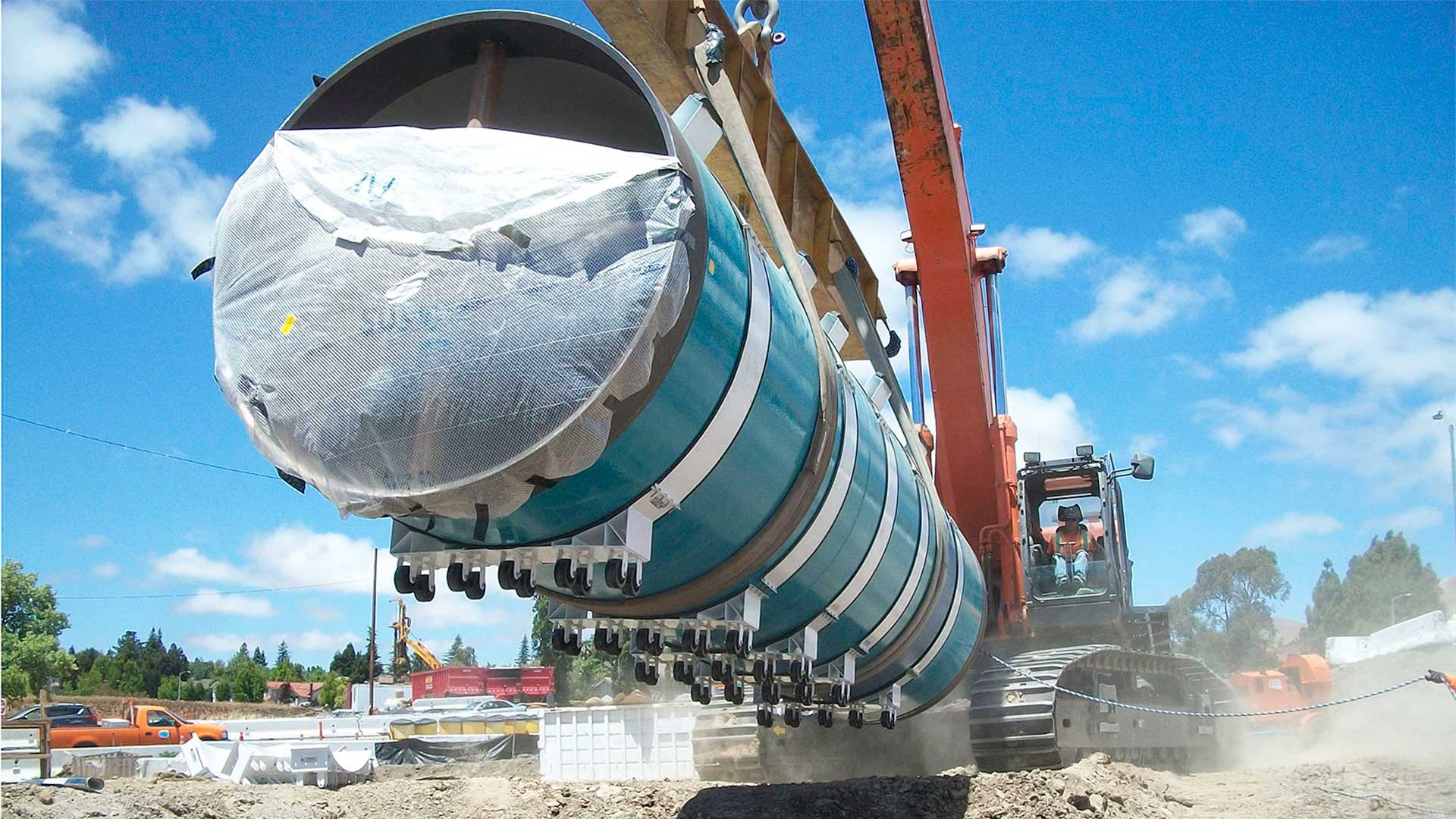
Steel water pipe has been in use for well over a century, and its jointing methods have evolved dramatically over time. From early riveted seams to today’s advanced welded and gasketed systems, each development has improved the efficiency, reliability, and adaptability of water pipelines.
Riveted Steel Pipe (1850s – 1930s)
The earliest steel water pipe was manufactured by rolling steel plates into cylinders and riveting the seams together. The higher the pressure, the more rivets were required. Flanged or riveted joints were commonly used to connect sections of pipe. While effective for the time, riveted construction was labor-intensive and limited in strength and flexibility.
Lock Bar Pipe (1905)
In 1905, the Australian government funded the construction of a 344-mile pipeline to serve the Coolgardie goldfields. This led to the invention of lock bar pipe, a design using an H-shaped steel bar with grooves that securely locked the pipe plates in place, creating a highly efficient seam. The New Jersey Pipe Company later adapted the design for use in North America. While the main pipe body was lock bar construction, fittings still required riveted seams.
The Shift to Welding (1930s Onward)
Welding transformed the steel pipe industry starting in the 1930s. Welded joints provided stronger, more reliable connections while reducing labor and material requirements. Common welded joint types included:
- Lap joints
- Butt strap joints
- Butt joints
These joints offered greater flexibility in design and improved hydraulic performance by creating smooth internal surfaces.
Bell and Spigot Welded Joints
Bell and spigot welded joints became popular for high-pressure and large-diameter applications. Benefits include:
- Reliable thrust resistance
- Ability to be mitered for angular deflection
- Welded inside, outside, or both
- Air testing capability when welded both inside and outside
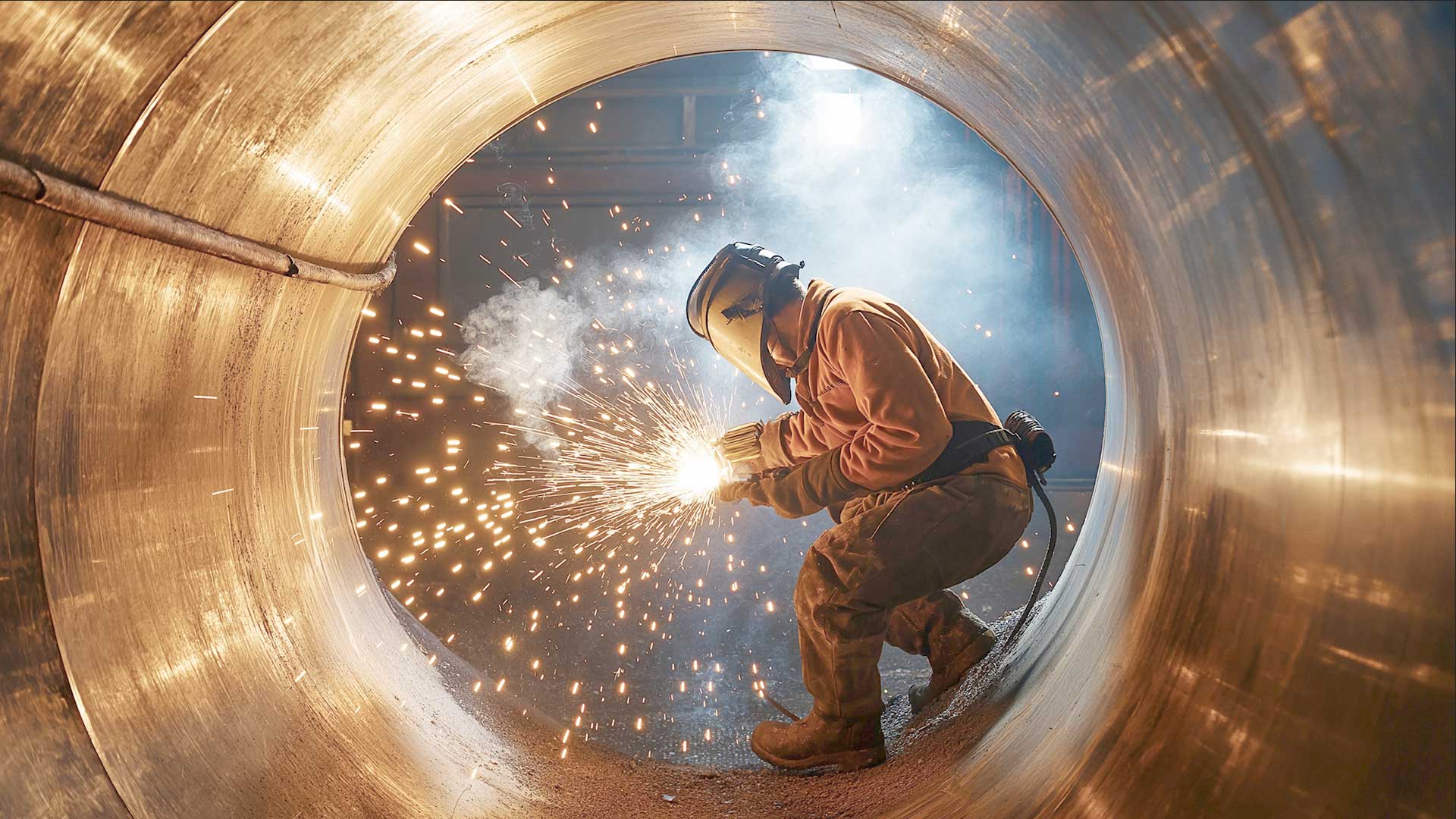
In practice, outside welding is often easier for smaller diameters, while inside welding can be advantageous if confined space safety requirements are met. Almost all underground large diameter steel piping projects weld after backfilling, reducing thermal stress by letting the pipe adjust to soil temperature before final welding.
O-Ring Gasketed Joints
Rolled bell and spigot or fabricated Carnegie joints use O-rings to create a compression seal. These joints are:
- Economical and quick to assemble
- Capable of slight angular deflection
- Non-restrained, relying on soil friction to resist thrust
- Limited by maximum size and pressure ratings
Careful gasket placement is essential; feeler gauges are recommended to ensure proper seating during assembly.
Butt Strap Joints
Butt strap joints are often used for closures, pipe length adjustments, and air testing in confined areas (such as tunnels) where hydro testing is impractical. They are shipped loose in halves for easier alignment.
Flange Joints
Steel flanges (per AWWA C207) remain widely used for connecting valves, pumps, equipment, and pipelines. Proper gasket selection, bolt size, and torque are critical to achieving a leak-free connection. When installed correctly, flange joints are extremely reliable and rarely fail.
Mechanical Couplings
Bolted sleeve-type couplings provide flexibility for disassembly and maintenance. By loosening bolts, the coupling can be slid aside, making repairs easier. In some cases, two couplings are installed in sequence to accommodate minor differential settlement.
Expansion Joints and Specialty Joints
Expansion joints absorb stresses from thermal expansion or contraction. Additional specialty joints include tapping sleeves and split-sleeve couplings, which serve specific operational needs within pipeline systems.
Conclusion
The evolution of steel water pipe joints reflects the industry’s progress in engineering, materials, and construction practices. From riveted seams to advanced welded and gasketed systems, each innovation has enhanced the safety, reliability, and longevity of water infrastructure.