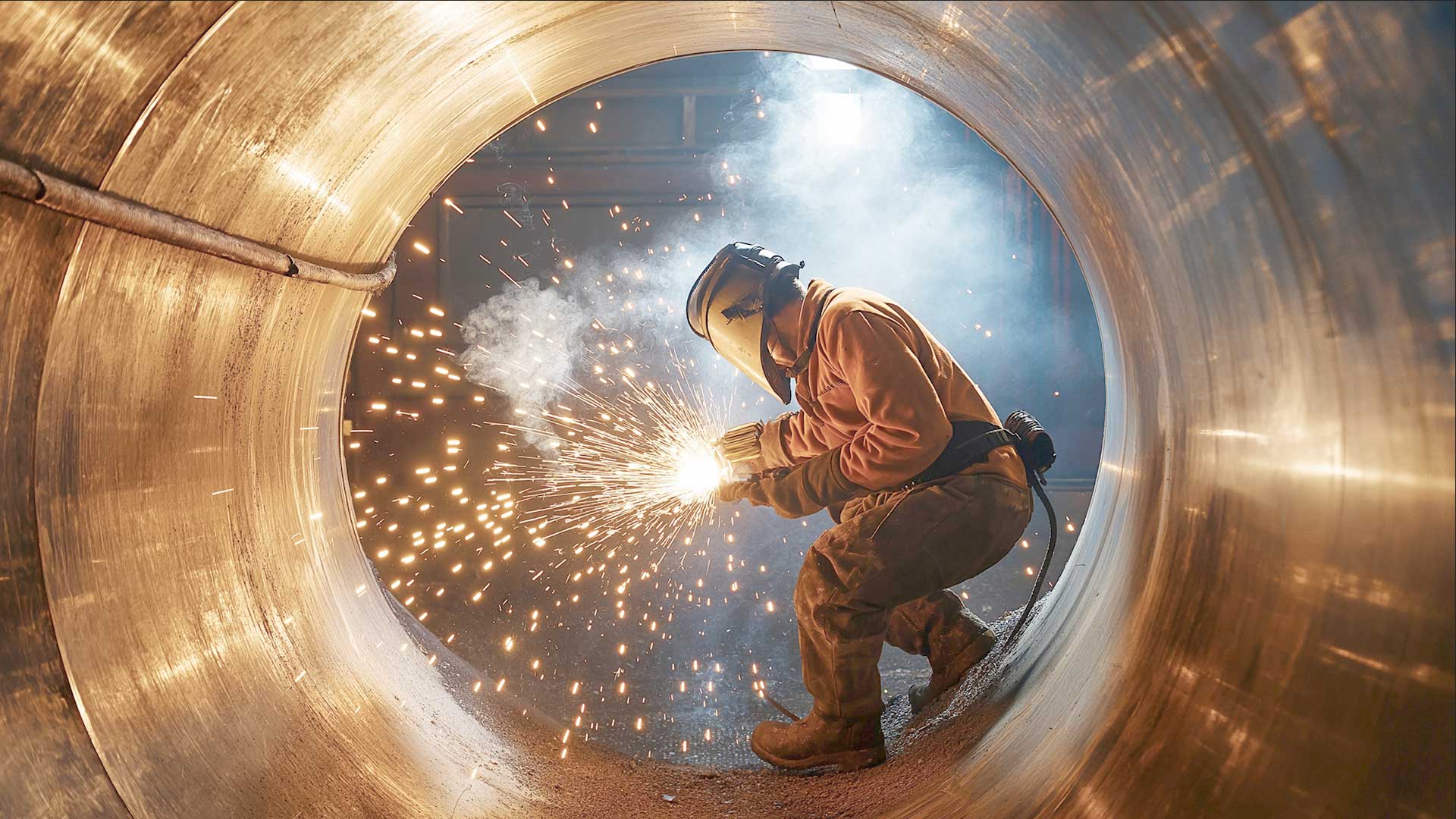
A pressure vessel is a container designed to hold gases, vapors, or liquids at a pressure significantly different from the surrounding atmosphere. Pressure vessels are used in industrial processes to store, heat, cool, separate, or process materials under pressure. Many pressure vessels are designed, fabricated, inspected, and tested according to applicable codes, standards, and project requirements.
What Is a Pressure Vessel?
A pressure vessel is industrial equipment designed to contain internal or external pressure. The contents may include air, steam, water, chemicals, petroleum products, gases, or other process materials. Pressure vessels are commonly used when a process requires materials to be stored or handled under controlled pressure and temperature conditions.
Pressure vessels may be vertical or horizontal, small or large, simple or highly specialized. Common examples include compressed air receivers, process vessels, reactors, separators, heat exchangers, autoclaves, accumulators, and storage vessels used in industrial facilities.
In industrial settings, pressure vessels are closely connected to steel fabrication, welding, inspection, testing, and code compliance. STI/SPFA members build steel pressure vessels that meet or exceed ASME and industry standards for use in petrochemical, food, power generation, and hazardous materials storage industries.
How Does a Pressure Vessel Work?
A pressure vessel works by safely containing a fluid, gas, vapor, or process material under pressure. The vessel shell, heads, nozzles, supports, openings, and attachments are designed to withstand the forces created by internal or external pressure.
When pressure increases inside a vessel, the vessel walls experience stress. The design must account for pressure, temperature, material strength, corrosion allowance, joint efficiency, welding requirements, openings, supports, and operating conditions. The goal is to maintain containment, support safe operation, and reduce the risk of failure.
The specific design depends on the vessel’s service. A compressed air receiver, chemical reactor, steam vessel, separator, or heat exchanger may each have different design pressures, temperatures, materials, inspection requirements, and documentation needs.
Common Types of Pressure Vessels
Storage
Pressure Vessels
A storage pressure vessel holds gases, vapors, liquids, or process materials under pressure until they are needed. These vessels may be used for compressed air, propane, chemicals, process fluids, or other materials depending on the application.
Storage pressure vessels are designed around containment, material compatibility, corrosion resistance, pressure rating, temperature, and safe operation.
Process Vessels
A process vessel is used as part of an industrial process rather than only for storage. Process vessels may mix, separate, heat, cool, react, filter, or otherwise handle materials during production.
Examples include reactors, separators, knock-out drums, columns, and other vessels used in chemical, petrochemical, food, pharmaceutical, power generation, and manufacturing environments.
Heat Exchangers
A heat exchanger may also be a pressure vessel when it contains fluids or gases under pressure. Shell-and-tube heat exchangers are common examples of equipment that may fall under pressure vessel requirements depending on pressure, temperature, service conditions, and applicable code requirements.
Heat exchangers transfer heat from one fluid, gas, or process stream to another while maintaining containment and separation between the process streams.
Air Receivers
An air receiver stores compressed air and helps stabilize pressure in a compressed air system. Air receivers are common in manufacturing plants, fabrication facilities, service shops, and other industrial operations.
Because compressed air stores energy, air receivers must be designed, installed, inspected, and maintained appropriately.
Reactors
A reactor is a pressure vessel used to support chemical or industrial reactions under controlled pressure and temperature conditions. Reactors may require specialized materials, agitation, heating or cooling jackets, corrosion resistance, and detailed inspection requirements.
Why Are Pressure Vessels Important?
Pressure vessels are important because they safely contain materials under pressure. Many industrial processes depend on pressure vessels to store compressed gases, process chemicals, generate steam, separate materials, transfer heat, or support production systems.
A properly designed and fabricated pressure vessel supports safe operation, process reliability, equipment protection, and regulatory compliance. A poorly designed, fabricated, inspected, or maintained vessel can create serious safety, operational, and financial risks.
Pressure vessels also play an important role in energy efficiency, product quality, and system performance. In many facilities, they are critical components within larger process systems.
Where Are Pressure Vessels Used?
Pressure vessels are used across a wide range of industries, including petrochemical, chemical processing, oil and gas, food and beverage processing, power generation, hazardous materials storage, pharmaceutical production, water and wastewater treatment, pulp and paper, and general industrial manufacturing.
STI/SPFA identifies pressure vessels as member-fabricated products used by the petrochemical, food, power generation, and hazardous materials storage industries.
Pressure Vessel vs. Storage Tank
A pressure vessel is designed to contain materials at a pressure significantly different from atmospheric pressure. A storage tank is generally designed to hold liquids at or near atmospheric pressure, although some tanks may operate under limited pressure or vacuum conditions depending on the design.
This distinction is important because pressure vessels and storage tanks are often designed, fabricated, inspected, and regulated under different codes, standards, and requirements. Pressure vessels commonly involve ASME Code considerations, while storage tanks may be governed by other tank standards, specifications, or regulatory requirements.
The correct classification depends on design pressure, temperature, contents, service conditions, jurisdictional requirements, and the applicable standard or code.
Key Design and Fabrication Considerations
Designing and fabricating a pressure vessel requires careful evaluation of the vessel’s intended service. The equipment must be built for the pressure, temperature, contents, environment, and operating conditions it will experience throughout its service life.
Important considerations include design pressure, design temperature, material selection, corrosion allowance, fluid compatibility, weld joint design, nozzle and opening reinforcement, supports, external loads, cyclic service, inspection requirements, pressure testing, documentation, and applicable codes and standards.
Material selection is especially important. Pressure vessels may be exposed to corrosive fluids, high temperatures, low temperatures, cyclic pressures, hazardous materials, or demanding process environments. The selected steel or alloy must be appropriate for the contents, operating conditions, fabrication process, and expected service life.
Fabrication quality is critical. Pressure vessel fabrication often involves qualified welding procedures, qualified welders, nondestructive examination, pressure testing, documentation, and quality control procedures required by code, project specification, or owner requirements.
Standards and Requirements to Know
Many industrial pressure vessels are designed and fabricated in accordance with the ASME Boiler and Pressure Vessel Code. STI/SPFA members build steel pressure vessels that meet or exceed ASME and industry standards.
ASME Section VIII is commonly associated with pressure vessel design and fabrication. ASME Section IX addresses welding, brazing, and fusing qualifications. STI/SPFA’s ASME Updates webinar provides education related to ASME Section VIII, ASME Section IX, and other ASME Code topics for STI/SPFA members.
Inspection, repair, alteration, registration, and jurisdictional requirements may also apply depending on the vessel type, location, service, and owner requirements.
For STI/SPFA members, the Pressure Vessel Consultant provides code and technical consulting support, including assistance with technical questions and input into code-related activities.
Common Misunderstandings
Is a pressure vessel the same as a tank?
No. A pressure vessel is designed to contain materials under pressure. A tank is generally used to store liquids at or near atmospheric pressure, although some tanks are designed for limited pressure or vacuum conditions. The applicable requirements depend on design pressure, service, contents, and governing standards.
Are all pressure vessels large industrial vessels?
No. Pressure vessels range from small compressed air receivers to large process vessels, reactors, separators, and heat exchangers. Size alone does not determine whether equipment is a pressure vessel. Pressure, service conditions, and applicable code requirements are key factors.
Are all pressure vessels made from steel?
No. Many industrial pressure vessels are made from carbon steel, stainless steel, or alloy materials, but other materials may be used depending on the pressure, temperature, contents, corrosion environment, and application.
Is every heat exchanger a pressure vessel?
No. Some heat exchangers operate at low pressure or under conditions that may not require pressure vessel code construction. Others, especially industrial shell-and-tube heat exchangers, may be pressure vessels when they contain fluids or gases under pressure.
FAQs
Related Resources
Pressure Vessels
Pressure Vessel Members Directory
Pressure Vessel Consultant
ASME Updates
Bureau Veritas Training Seminar Discounts
Standards & Regulatory Resources
Steel Facts
The Development of Steels and Their Uses
Learn more about STI/SPFA members and resources related to pressure vessels, heat exchangers, and steel fabrication.
Explore related technical resources or connect with STI/SPFA to find member companies serving industrial pressure vessel applications.