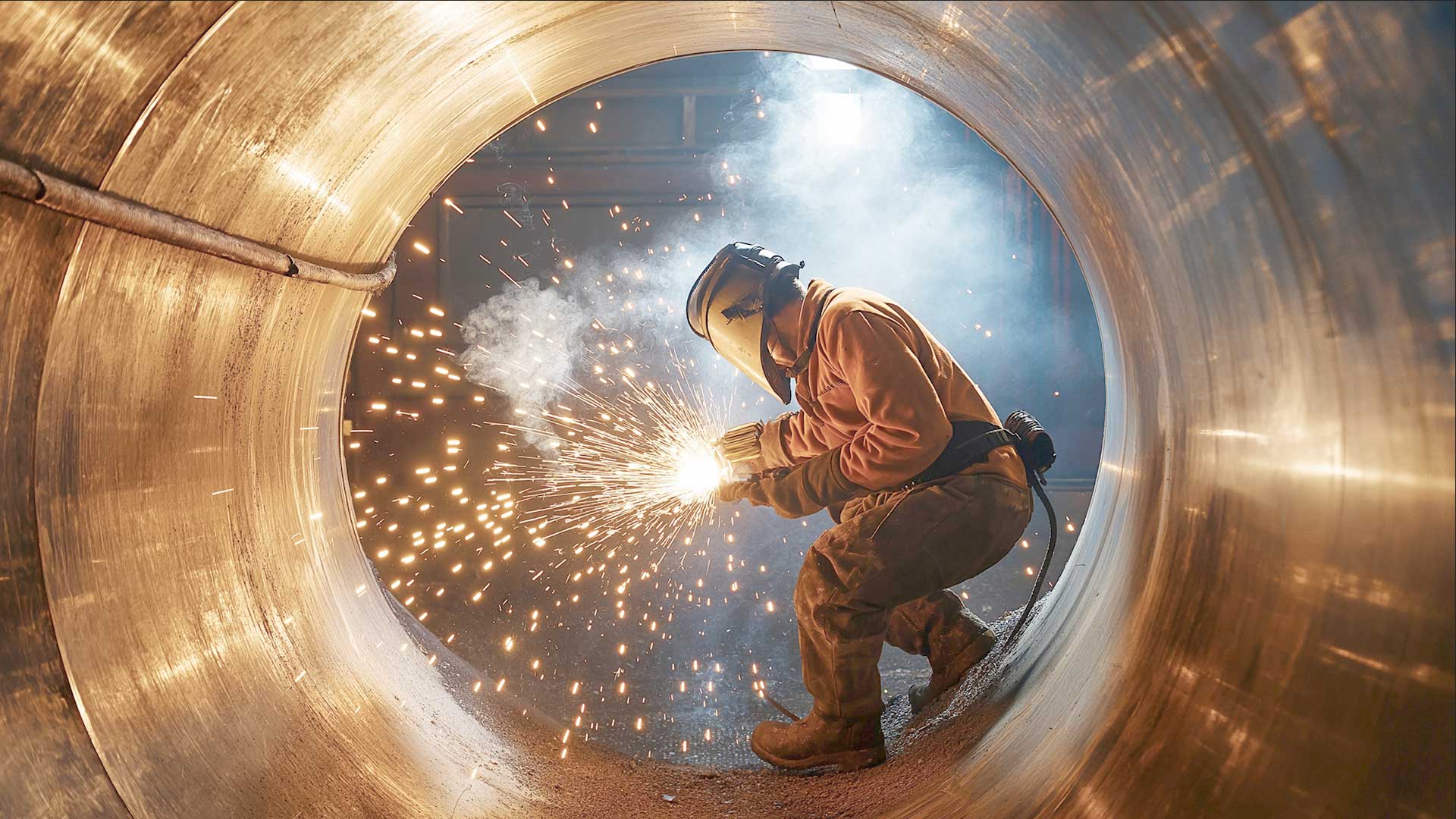
A heat exchanger is a device used to transfer heat from one fluid, gas, or process stream to another. Heat exchangers are commonly used to heat, cool, condense, or evaporate materials in industrial processes. In many applications, the fluids remain separated while heat moves through a metal surface, such as tubes, plates, coils, or other heat transfer components.
What Is a Heat Exchanger?
A heat exchanger is industrial equipment designed to move heat from a hotter medium to a cooler medium. The media may be liquids, gases, steam, refrigerants, chemicals, oil, water, or other process fluids. In many heat exchangers, the two fluids do not mix. Instead, heat passes through a conductive surface, such as a steel tube wall, plate, or coil.
Heat exchangers are used when a process requires controlled heating or cooling. They may be standard units or custom-fabricated equipment designed for a specific pressure, temperature, material, flow rate, corrosion environment, or industry application.
In industrial settings, heat exchangers are often closely related to pressure vessels and specialty fabricated steel products. STI/SPFA represents fabricators of steel tanks, pipe, pressure vessels, heat exchangers, and specialty fabricated products serving industries such as petrochemical, power generation, food, pharmaceutical, fuels, wastewater, and water transmission.
How Does a Heat Exchanger Work?
A heat exchanger works by allowing heat to move from one medium to another. In a typical indirect-contact heat exchanger, one fluid enters the equipment at a higher temperature while another fluid enters at a lower temperature. The fluids flow through separate passages, and heat transfers through the metal surface between them.
As the process occurs, the hotter stream loses heat and the cooler stream gains heat. The direction of flow can affect performance. In some designs, the fluids flow in the same direction, known as parallel flow. In others, they flow in opposite directions, known as counterflow. Some designs use crossflow, where the streams move across each other at an angle.
The specific design depends on the process requirements. A heat exchanger used in a refinery, chemical plant, food processing facility, power plant, or wastewater operation may have different materials, pressure ratings, inspection requirements, and maintenance needs.
Common Types of Heat Exchangers
Shell-and-Tube Heat Exchangers
A shell-and-tube heat exchanger uses a bundle of tubes enclosed inside a larger cylindrical shell. One fluid flows through the tubes while another fluid flows around the outside of the tubes within the shell. Heat transfers through the tube walls.
Shell-and-tube heat exchangers are common in industrial service because they can be designed for demanding pressure, temperature, and process conditions. They are often used in applications where durability, serviceability, and code-compliant fabrication are important.
Plate
Heat Exchangers
A plate heat exchanger uses a series of thin plates to create separate channels for fluid flow. Heat transfers through the plates as the fluids pass through adjacent channels. Plate heat exchangers are often compact and efficient, making them useful in applications where space and thermal performance are important.
However, plate heat exchangers may not be appropriate for every pressure, temperature, fouling, or maintenance condition. The correct design depends on the process fluid, operating environment, and performance requirements.
Air-Cooled
Heat Exchangers
An air-cooled heat exchanger uses air to remove heat from a process fluid. Fans often move air across finned tubes or coils to support heat transfer. These systems are common where water is limited, where water treatment is a concern, or where air cooling is preferred for environmental or operational reasons.
Double-Pipe Heat Exchangers
A double-pipe heat exchanger uses one pipe inside another. One fluid flows through the inner pipe, and the other flows through the space between the inner and outer pipe. These heat exchangers are often used for smaller heat transfer duties or applications where a simple, durable design is appropriate.
Why Are Heat Exchangers Important?
Heat exchangers are important because temperature control is essential in many industrial processes. They help maintain safe operating conditions, protect equipment, improve process efficiency, and support consistent product quality.
In some applications, heat exchangers recover heat that would otherwise be wasted. In others, they remove heat to prevent overheating or cool a process stream before the next stage of operation. Heat exchangers may also be used to condense vapors, evaporate liquids, preheat feed streams, cool finished products, or support energy recovery.
For many industrial facilities, heat exchangers are not just supporting equipment. They are critical components in the overall system. Poor heat exchanger design, material selection, fabrication, inspection, or maintenance can affect production reliability, energy use, safety, and long-term operating costs.
Where Are Heat Exchangers Used?
Heat exchangers are used across a wide range of industries, including oil and gas, chemical processing, power generation, refineries, food and beverage processing, water and wastewater treatment, HVAC and mechanical systems, pulp and paper, pharmaceuticals, and general industrial manufacturing.
STI/SPFA’s membership includes companies that fabricate pressure vessels, heat exchangers, and other specialty fabricated steel products for petrochemical, power generation, food, pharmaceutical, fuels, wastewater, and water transmission industries.
Heat Exchanger vs. Pressure Vessel
A heat exchanger may also be a pressure vessel when it is designed to contain fluids or gases under pressure. Many industrial shell-and-tube heat exchangers are designed and fabricated in accordance with pressure vessel requirements, including applicable ASME Code provisions.
However, not every heat exchanger is classified or regulated the same way. Some operate at lower pressures or under conditions that may not require pressure vessel code construction. The applicable requirements depend on the design pressure, temperature, materials, jurisdiction, fluid service, owner specifications, and intended use.
This distinction is important for engineers, owners, purchasers, and inspectors. When a heat exchanger is also a pressure vessel, fabrication quality, welding procedures, inspection, testing, documentation, and code compliance become central parts of the project.
Key Design and Fabrication Considerations
Designing and fabricating a heat exchanger requires more than determining how much heat must be transferred. The equipment must be built for the service conditions it will experience throughout its operating life.
Important considerations include operating pressure, operating temperature, fluid compatibility, corrosion resistance, material selection, heat transfer requirements, flow rate, pressure drop, cleanability, maintenance access, welding quality, inspection requirements, testing, and applicable codes and standards.
Material selection is especially important. Heat exchangers may be exposed to corrosive fluids, high temperatures, cyclic service, fouling, or aggressive process environments. The selected steel or alloy must be appropriate for the fluid, operating conditions, fabrication method, and expected service life.
Fabrication quality is also critical. For pressure-rated heat exchangers, welding procedures, welder qualifications, nondestructive examination, pressure testing, and documentation may be required by code, project specification, or owner requirements.
Standards and Requirements
to Know
Many pressure-rated industrial heat exchangers are designed and fabricated in accordance with the ASME Boiler and Pressure Vessel Code. STI/SPFA’s ASME Updates webinar focuses on ASME Section VIII, ASME Section IX, and other information related to the ASME Code for STI/SPFA members.
TEMA standards are commonly associated with shell-and-tube heat exchanger design and construction practices. Depending on the application, API standards, owner specifications, jurisdictional rules, and corrosion-related guidance may also apply.
For STI/SPFA members, the Pressure Vessel Consultant provides code and technical consulting support, including assistance with technical questions and code-related activities. This resource supports both pressure vessel and heat exchanger content.
Common Misunderstandings
Is a heat exchanger the same as a boiler?
No. A boiler is designed to generate hot water or steam. A heat exchanger is designed to transfer heat between fluids, gases, or process streams. Some systems may include both boilers and heat exchangers, but they are not the same piece of equipment.
Do the fluids mix inside a heat exchanger?
Usually, no. In many heat exchangers, the fluids remain separated by metal tubes, plates, coils, or other heat transfer surfaces. Heat moves through the surface, but the fluids do not mix. Some specialized designs use direct contact between fluids, but that is not the most common arrangement for many industrial applications.
Are all heat exchangers custom fabricated?
No. Some heat exchangers are standard or off-the-shelf units. Others are custom designed and fabricated for a specific industrial process, pressure rating, temperature, material, fluid, corrosion environment, or code requirement.
Is every heat exchanger a pressure vessel?
No. Some heat exchangers operate at low pressure or are not regulated as pressure vessels. Others, especially industrial shell-and-tube heat exchangers, may be pressure vessels and may need to meet applicable code and inspection requirements.
FAQs
Related Resources
Heat Exchangers
Heat Exchangers Member Directory
Heat Exchangers and Pressure Vessels
The Development of Steels and Their Uses
Learn more about STI/SPFA members and resources related to pressure vessels, heat exchangers, and steel fabrication.
Explore related technical resources or connect with STI/SPFA to find member companies serving industrial heat exchanger applications.