Introduction
Steel pipe is one of the most reliable and versatile materials used in water infrastructure, thanks to its strength, durability, and adaptability to a wide variety of applications. From raw steel production to the fabrication of fittings, the process of manufacturing pipe is governed by strict standards and extensive testing to ensure safety and long-term performance.
This article provides an overview of the steel making process, material testing methods, and the standards that guide pipe and fitting design.
Steel and Pipe Manufacturing Overview
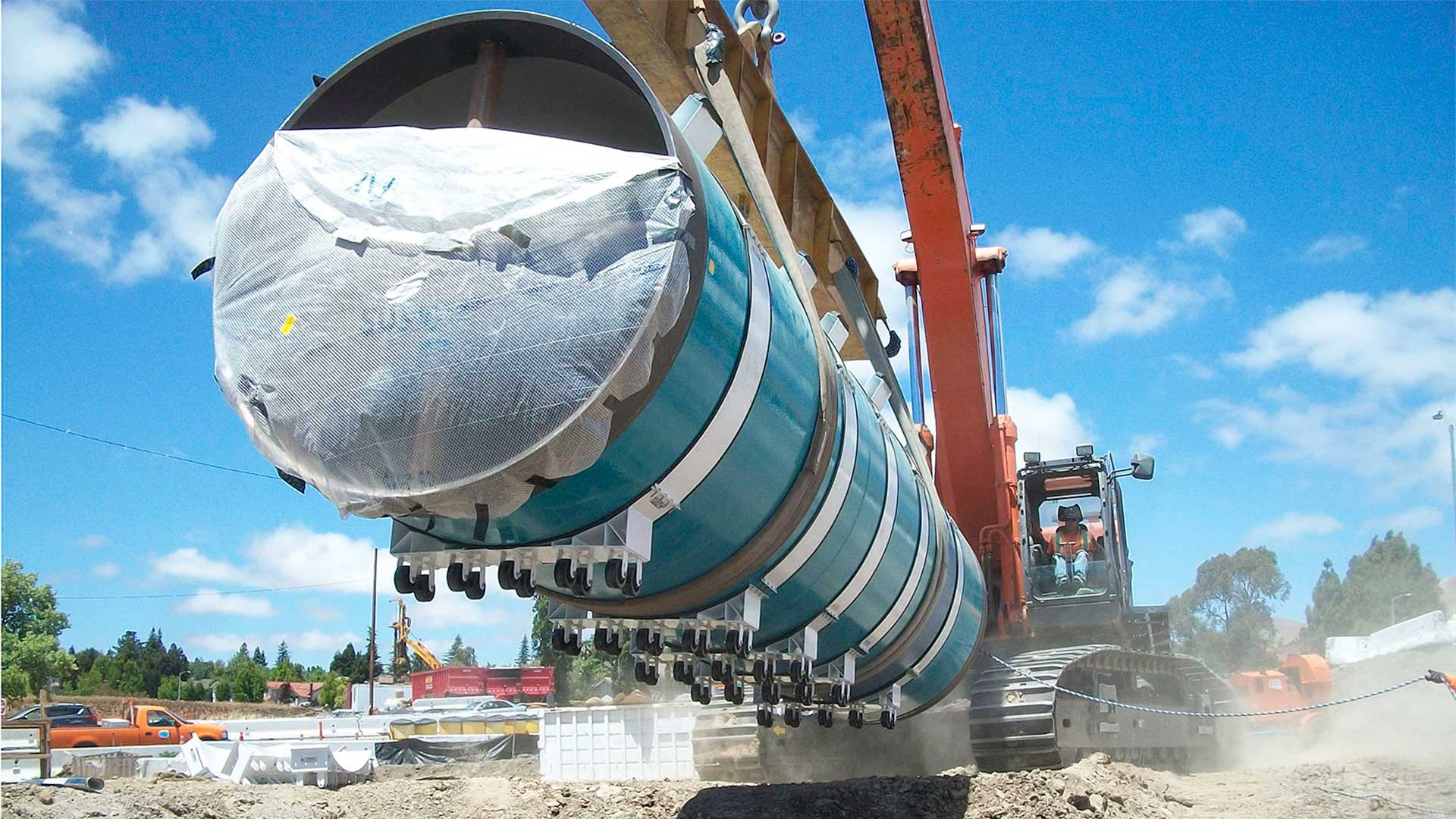
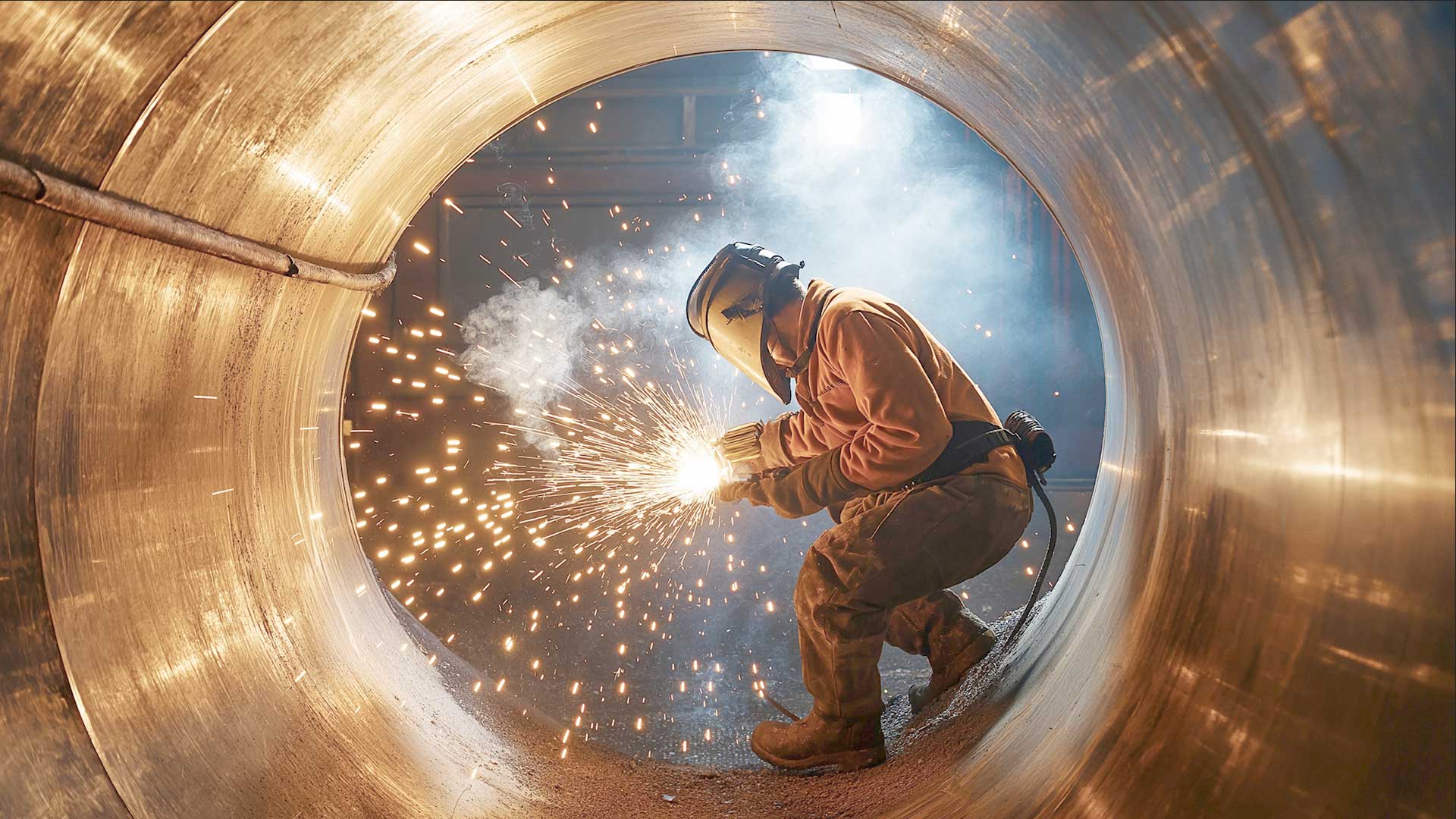
The manufacture of steel pipe begins with the production of high-quality steel, followed by forming it into pipe through processes such as welding, rolling, and fabrication. Once produced, pipe is subject to rigorous testing and inspection before being approved for use in critical water, wastewater, and industrial applications.
One important aspect of pipe manufacturing is the fabrication of fittings. A fitting is defined as any piece of pipe that requires additional fabrication after being rolled into a pipe at the mill. Fittings are most commonly produced by cutting, fitting, and welding segments of straight pipe. Typical examples include tees, reducers, elbows, wyes, outlets, and manways. The design and calculation of these fittings are governed by AWWA C208 and AWWA M11, which provide detailed methodologies for determining geometry, stresses, and installation requirements.
Governing Standards
The manufacture and use of steel pipe are guided primarily by standards developed by the American Water Works Association (AWWA) and the American Society for Testing and Materials (ASTM).
- AWWA Standards focus on performance and design requirements for steel pipe in water service, including welding, joints, coatings, linings, and fittings.
- ASTM Standards establish material specifications, testing protocols, and product requirements for steel itself, ensuring uniformity and quality in the base material.
Together, these standards provide the framework that ensures steel pipe products meet stringent durability, safety, and performance expectations across the water and wastewater industries.
Material Testing and Quality Control
To guarantee performance, steel pipe undergoes a wide range of destructive and non-destructive testing. Some of the most common methods include:
- Impact Testing (Charpy) – Used to determine toughness and resistance to brittle fracture of thicker steels.
- Magnetic Particle Inspection – Identifies surface and near-surface discontinuities in ferromagnetic materials.
- Dye Penetrant Testing – Highlights cracks and flaws open to the surface.
- Ultrasonic Testing – Detects internal defects through sound wave propagation.
- Radiographic (X-ray) Testing – Provides a full internal view of welds and pipe walls for hidden flaws.
Additional testing may include cement mortar lining and coating inspections to ensure the pipe can resist internal and external corrosion throughout its service life.
Pipe Fittings and Applications
Steel pipe fittings serve as critical components for adapting, redirecting, or terminating pipelines. Because fittings are fabricated rather than rolled as single pieces, design must carefully account for stresses introduced at welds and junctions.
AWWA C208 provides dimensional general guidelines for fabricated steel pipe fittings, while AWWA M11 offers broader design guidance for steel pipe and fittings used in water transmission. These standards ensure fittings meet pressure, flow, and durability requirements consistent with the larger pipe system.
Conclusion
Steel pipe manufacturing is a highly technical process that balances material science, fabrication techniques, and rigorous quality testing. From the initial production of steel to the fabrication of complex fittings, compliance with AWWA and ASTM standards is essential to ensuring reliable performance in water transmission systems.
For engineers and contractors, understanding both the testing methods and the design standards is key to specifying and installing steel pipe that will meet the demands of modern infrastructure.