UL 142 and ULC 601 are two widely recognized standards governing shop-fabricated, aboveground, atmospheric steel tanks used to store flammable and combustible liquids. While both standards serve a similar purpose, they are developed for different regulatory environments.
UL 142 is the primary standard used in the United States. ULC 601 is the corresponding Canadian standard used within Canada’s national and provincial regulatory framework.
At a high level, both standards establish construction and performance requirements for aboveground steel tanks. However, the appropriate standard is typically determined by project location, applicable codes, and the expectations of the authority having jurisdiction.
Understanding how these standards align—and where they differ—is important for engineers, specifiers, manufacturers, and owners working across borders or specifying tanks for projects in different jurisdictions.
UL 142: Scope and Application
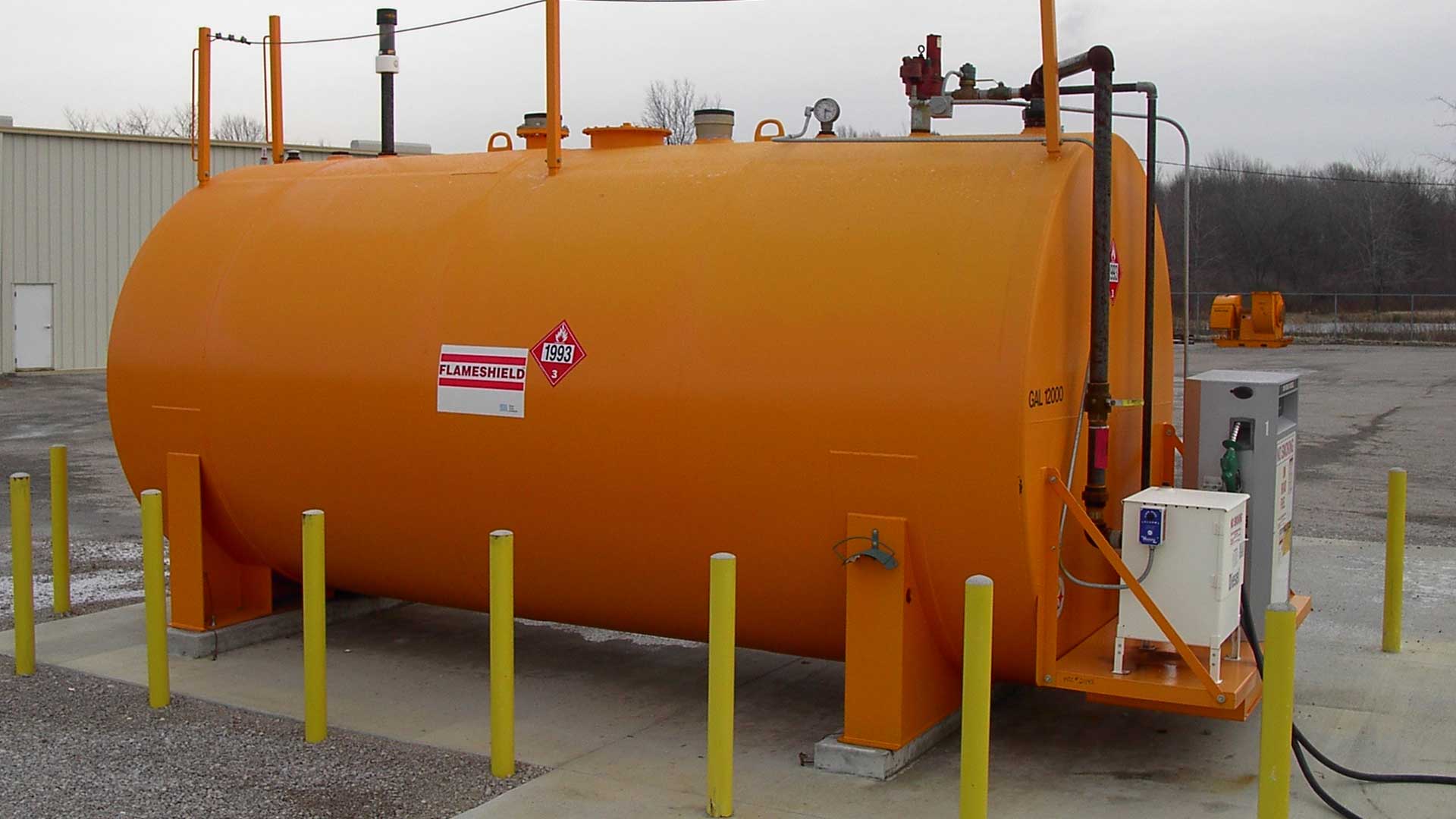
UL 142 covers steel atmospheric tanks intended for the storage of stable, noncorrosive flammable and combustible liquids in aboveground applications. The standard applies to shop-fabricated tanks and includes requirements for primary, secondary containment, and diked configurations.
In practice, UL 142 serves as the baseline construction standard for aboveground steel tanks in the United States. It is commonly referenced alongside installation and fire codes such as NFPA 30, NFPA 30A, and the International Fire Code.
These codes govern how tanks are installed, including siting, separation distances, venting, spill control, and fire protection requirements. As a result, UL 142 should be viewed as one component of a broader compliance framework rather than a standalone solution.
ULC 601: Scope and Application
ULC 601 is the Canadian standard for shop-fabricated steel aboveground tanks used to store flammable and combustible liquids. Like UL 142, it applies to atmospheric storage tanks manufactured in a controlled shop environment.
ULC 601 operates within the Canadian regulatory structure and is typically used in conjunction with the National Fire Code of Canada, CSA B139 where applicable, and environmental guidance such as the CCME Code of Practice for storage tank systems.
Because of these differences in governing codes, ULC 601 aligns with Canadian regulatory expectations, even when tank designs appear similar to those used in the United States.
Key Similarities
UL 142 and ULC 601 share several important characteristics. Both standards apply to shop-fabricated steel aboveground tanks designed for atmospheric service. Both address storage of flammable and combustible liquids.
Each standard serves as a foundational product standard within its respective country, establishing minimum construction, testing, and performance requirements.
In both cases, the tank standard works in combination with installation codes, environmental regulations, and authority having jurisdiction requirements to determine overall compliance.
Key Differences
The most significant difference between UL 142 and ULC 601 is jurisdiction. UL 142 is aligned with U.S. codes and regulatory systems, while ULC 601 is aligned with Canadian codes and enforcement frameworks.
Because of this, the standards are not interchangeable from a compliance standpoint. A UL 142 listed tank may not satisfy Canadian regulatory requirements, and a ULC 601 listed tank may not meet U.S. expectations without additional review.
A review of a UL142 tank shipped to Canada is possible, but that doesn’t mean the permit authority will accept a review of a tank design in lieu of ULC label. It would be quite difficult and expensive to apply a ULC label to UL tank if it wasn’t done at a listed facility.
There are also differences in technical details such as marking, testing, and documentation requirements. While these differences are important, they are typically secondary to the broader issue of ensuring the tank listing matches the governing jurisdiction.
There are also differences in material requirements, tank sizing, wall thickness, and venting between the two standards.
For UL142 the tank length is limited to six times the tank diameter, regardless of whether the tank is single- or multi-compartment. But for ULC the limits for single-compartment tanks to four times the diameter and multi-compartment tanks to six times the diameter.
The shell thickness requirements also differ between the two. Under the UL 142, the required shell thickness is determined by both the tank capacity and the tank diameter, whereas ULC bases the minimum shell thickness primarily on the tank diameter alone. As a result, the thickness requirements and the diameter thresholds at which thicker material is required are not always the same between the two standards.
Another key difference is the venting requirements, which vary significantly between the two standards and can affect size and total venting capacity. For ULC the emergency vent must be installed by tank manufacture and where the UL 142 the end user is responsible to sizing and installing the vent.
Specification Considerations
When specifying an aboveground steel tank, it is important to clearly identify the required listing standard early in the project. Omitting this detail can lead to confusion during procurement, submittal review, or inspection.
Projects located in the United States will require UL 142 tanks. Projects in Canada will require ULC 601 tanks.
This becomes especially important for organizations operating in both countries. Even when tank configurations appear similar, the listing, documentation, and approval process must align with the local applicable regulatory environment.
Early coordination with the manufacturer and the authority having jurisdiction can help prevent delays, redesign, or resubmittals later in the project.
Related Considerations
It is important to distinguish these baseline construction standards from standards that address enhanced protection. For example, UL 2085 defines requirements for protected aboveground tanks with fire resistance, impact protection, and integral secondary containment.
UL 142 and ULC 601 should be understood as foundational standards within their respective jurisdictions, rather than direct equivalents to protected tank standards.
Questions to Resolve Early
Before selecting a standard, several key questions should be addressed. Where will the tank be installed? What codes govern the project? What are the expectations of the authority having jurisdiction?
It is also important to confirm the type of liquid being stored, whether additional containment or fire protection is required, and whether environmental regulations impose additional requirements.
Another important consideration is the specific jurisdiction where the tank will be installed, as local authorities may impose additional requirements beyond the national standard.
For example, certain jurisdictions such as the state of California and the province of Ontario have additional environmental, venting, and emissions requirements that must be incorporated into the tank design.
Seismic requirements should also be considered based on the installation location. In regions with moderate to high seismic activity, additional design considerations may be required for the tank supports and saddles.
Resolving these questions early helps ensure the selected standard aligns with both regulatory expectations and project needs.
Conclusion
UL 142 and ULC 601 both support safe and effective use of shop-fabricated aboveground steel tanks for flammable and combustible liquid storage.
The primary distinction is not performance level, but jurisdiction. UL 142 is the standard used in the United States, while ULC 601 is used in Canada.
Selecting the correct standard at the outset of a project ensures smoother specification, approval, and installation, while reducing the risk of delays or compliance issues.